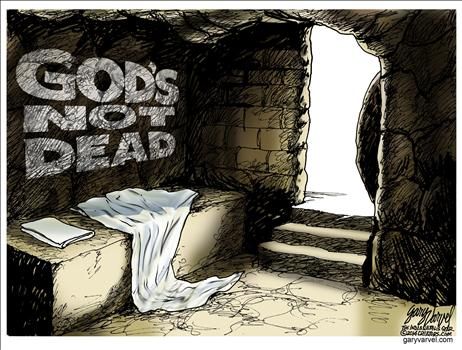
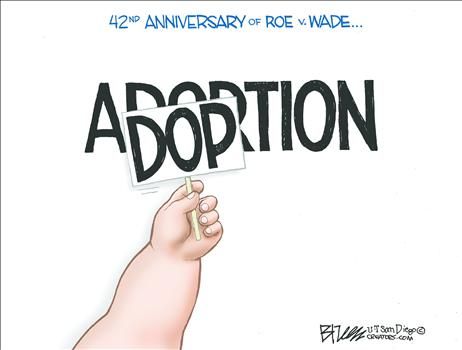
[Be sure to check out this week's broadcast of "Truth That Transforms" (formerly The Coral Ridge Hour) today (5 pm, ch. 55.1, Orlando) Also, check out the ediotrial cartoons at www.Worldmag.com]
Panic. Worry. Anger. Fear. Regret(should I have bought gold when it was way cheaper?). Or maybe "It's been lovely but I have to scream now." I'm sure that you can add a few words [I hope no expletives (: ] to that list that describes my emotions when the stock market tanked day after day this past week, giving the sensation of riding a roller coster. As a Christian, we do in our gut trust God but there are times when we want to scream,"Hey, did you really have to let that happen?!"
Well, over 30 years ago, I had something happen to me that might be instructive as well as encouraging for you. Being in full-time ministry, I was then going on a community college daily to meet with students and to share Christ with those with whom God gave me opportunity One day, I decided to take my camera to campus to take some pictures and carried it in my hands so that I would remember to use it. Toward the end of the day, I stopped by to talk with a student who was sitting on a bench. I somewhat remember placing the camera on the bench on my right and turned to my left to engage in conversation. After awhile, the conversation ended and I got up to walk off campus with the guy. When that walk ended up at the school parking lot, I just went to my car and went on home.
Shortly after walking through the front door, I suddenly looked at my hand and realized I was not carrying my camera. I immediately realized that I had left it on that bench back at the school. In a panic, I jumped in my car and sped to the campus and ran to that bench, but the camera was gone. After berating myself for being so careless, I suddenly had the thought of going to the administration office to see if someone might have found it and turned it in. When I explained what had happened, not only was I told no one had done that, but the woman actually broke out laughing, saying,"Do you really think that if someone found a camera they would turn it in? Of course, theyre just going to keep it." Suddenly, I not only felt stupid but felt humiliated and embarassed.By the I got home, I was really upset. After a few moments, I just sort of took a deep breah and said something like,"Okay Lord,I give up. I acknowledge that it was after all Your camera and so if you want to take it from me that's up to you." I remember opening my eyes then feeling a great peace and then started to do something else.
Just then, the phone rang and it was my Mom calling from many miles away at my parents' home. She immediately said, "Did you lose your camera?" to which I believe my jaw dropped open. When I asked her how she knew that, she said she just got a call from the school saying that someone had just turned in a camera with my name and old (their) phone number on it. I immediately drove back to the school and sure enough they had my camera. (Unfortunately, I don't recall being able to have it returned to me by that very office worker who had only an hour before laughed at me. Needless to say, that would have been so sweet!)
As I overflowed with thankfulness when I got back h0me, I sat for a moment to think about what had happened. I felt the Lord reminding me that I was merely a steward of my posessions and that in truth God is always the real owner. It was though God took the camera from me to check my understanding of that truth, and when I was finally willing to entrust it to him rather than get upset at "my" loss, He not only gave me His peace but He even returned the camera. I always recall that incident to remind me to hold on to my posessions - yes, especially my savings - loosely. After doing my best to care for the things I am steward over, I need to rest in however He sovereignly chooses to dispose of those posessions. As I once told someone who asked me if I was sure I had enough money saved up to live out my life, even if I lose every dime I am steward of, it just may be God's way of giving me the opportunity to minister to the homeless as one of them!
So, my friend, do your best to invest your money wisely - as God gives you wisdom - and then, when you experience economic uncertainty, scream first, but then remember to hold on to your posessions lightly, remember that you are but stewards of them, and entrust them to the care of God, who is the ultimate owner of all things, and leave the results to Him. As the Scripture teaches, "Cast all your anxiety on Him, because He cares for you." (I Pet. 5:7)
(Postscript: It's similar to when i inherited a huge sum of money when my parents died. Someone at church said that I must be excited. I evidently shocked her when I paused and said, "No, I'm acatually afraid." when she incredulously asked me how that could be, I said, "Because I know the money all belongs to God and I'm responsible for how I spend every penny of it.")
Wednesday, August 10, 2011
#111 - The London Riots - Living Without God; Making Too Much?
[I present below 2 articles I've come across that address what has been behind the riots taking place in London. The first one presents a Christian view whereas the second one speaks more of how there are parallels for what has been happening in America. I believe they are both worth your time.]
P.S.- Please be sure to check my Sunday Special on my essay on a Christian response to economic uncertainty.
[bold and italics emphases below MINE]
No Shock that London is Burning - Dale Hurd CBN News Sr. Reporter; http://blogs.cbn.com/hurdontheweb/archive/2011/08/09/no-shock-that-london-is-burning.aspx August 9, 2011
"Why, exactly, is it wrong to loot and to burn?" Imagine hearing this question from one of the London rioters, if you were to stop them as they were lifting a sweet flat screen from a shop in Brixton or Hackney, and if they didn’t just give you a violent shove out of their way instead. If they did ask you this question, it might even be sincere, accompanied by a puzzled look. When you live on the bottom strata in a post-Christian moral vacuum, it’s not about right or wrong, but simply about have or have not.
The destruction began after a shooting involving London Police and has spread to several cities. Some news agencies and politicians have tried to tie the rioting to unrest over welfare cuts. This paints a respectable political veneer over top what is a feral mass crime spree. There undoubtedly is some political expression within the looting and burning, and that would be rage and revenge against a society and a system that the poor feel is stacked against them. To quote one rioter, "(We're) showing the rich we do what we want." One cannot pick on Britain exclusively, because America has this problem as well, and the crisis du jour in Britain is a crisis of the whole Western world, and it’s coming to a city near you. It is a crisis of faith.
Britain is a nation now so secular that when former Prime Minister Tony Blair wanted to end a speech to the nation with “God bless you,” it was nixed by his staff for fear of offending too many people. Some years ago, when a Mori poll for the BBC's Heaven & Earth program asked the British to name an 'inspirational' figure - Jesus finished at the bottom, not even close to "none of the above" or Britney Spears. The only real operating “moral” code in a post-Christian nation like Britain is a very vague, conditional sense of the Golden Rule used to reinforce the new national creed of selfishness and hedonism. The other is the threat of jail.
This is true across Europe and in many parts of America. One cannot expect young people, taught to believe that Christian morals are evil and oppressive, and that the only final reality is material and energy shaped by pure chance, to decide to honor law or property or their fellow man. Without God, it becomes the law of the jungle.
The Ministry of Making Too Much by John Hayward (HumanEventsDaily@email.humanevents.com) August 9, 2011
After I was critical of the tactics used by striking union members against Verizon, I received several responses to the effect that vandalism and violence are justified because Verizon makes too much profit, and its executives make too much money. One correspondent defended union lawbreaking by citing Verizon executive Ivan Seidenberg’s $18 million annual compensation package. That sure is a lot of money, so I guess cutting fiber optic lines and stealing electronic equipment is justified. I know some young people in Britain who would enthusiastically agree. The BBC recorded an interview with two giggling teenage girls who explained,“It’s the rich people who have got all the businesses. That’s why all this is happening, because of the rich people. We’re showing the rich we do what we want.”
If you’ve been following the British riots at all, you’ve noticed the targets of looting and robbery have not been exclusively “rich people,” by any stretch of the imagination. Perhaps we could avoid confusion, both in America and England, by setting up a Ministry of Making Too Much, to declare the exact point at which increasing wealth completely erases the rights of an individual.The Ministry will need a large staff and lots of funding, because it’s got a big job ahead of it. There are many nuances that must be ironed out. Will the salaries of union executives and politicians be regulated too? Do entertainers and athletes also make too much money? Will the lifetime earnings of each individual and corporation be considered, or just how much they pulled down last year?
Since all the smart people inside the Beltway assure us that moving back to a system of greater economic liberty is impossible, maybe it’s time we went the other way, and created a powerful bureaucracy staffed by selfless public servants to strictly codify envy. At least we wouldn’t have to wait for Presidential speeches, rowdy union demonstrations, and riots to find out who we’re supposed to hate.
- For more about this action agsintst Verizon, check: Striking Union Extremists Imprison Verizon Replacement Workers In Pennsylvania, http://www.redstate.com/laborunionreport/2011/08/11/striking-union-extremists-imprison-verizon-replacement-workers-in-pennsylvania/
Monday, August 8, 2011
#110 - Credit Rating Downgrade - Why You Can't Blame the Republicans/Tea Party
Prayer Alert - Please continue to remember the families and comrade-in-arms of the nearly 3 dozen of our brave fighting men who perished in Afghanistan this past Saturday, and whose bodies are being returned to the US today. Pray that knowing Him will comfort them and that this tragedy will especially draw those who have yet to come into a relationship withh Him.
Left Rushs to Blame the GOP for S&P Downgrade
Posted by Erick Erickson http://www.redstate.com/erick/2011/08/05/left-rushs-to-blame-the-gop-for-sp-downgrade/ Friday, August 5th
The S&P has downgraded American credit from AAA to AA+, the first time in history. The left is scrambling to blame the GOP for this and is fixated on one paragraph
The issue here, however, is that while present law presumed the GOP tax cuts would go away, the policy presumption is that they would get extended. Likewise, this is not blaming the GOP. This is a statement of reality that the GOP wasn’t going to "Compared with previous projections, our revised base case scenario now assumes that the 2001 and 2003 tax cuts, due to expire by the end of 2012, remain in place. We have changed our assumption on this because the majority of Republicans in Congress continue to resist any measure that would raise revenues, a position we believe Congress reinforced by passing the act. Key macroeconomic assumptions in the base case scenario include trend real GDP growth of 3% and consumer price inflation near 2% annually over the decade." raise taxes.Consequently, because the GOP refused to raise taxes, the alternative needed to be more cuts.
And S&P clearly believes that the cuts the debt deal made were not enough. And who opposed big cuts? Why yes, a guy named Barack Obama and the Democrats.
"We view the act’s measures as a step toward fiscal consolidation. However, this is within the framework of a legislative mechanism that leaves open the details of what is finally agreed to until the end of 2011, and Congress and the Administration could modify any agreement in the future. Even assuming that at least $2.1 trillion of the spending reductions the act envisages are implemented, we maintain our view that the U.S. net general government debt burden (all levels of government combined, excluding liquid financial assets) will likely continue to grow."
The Democrats can spin this as blaming the GOP all they want since they clearly got outplayed and still saw a downgrade, but the S&P downgrade has nothing to do with any specific policy. In fact, S&P says "Standard & Poor’s takes no position on the mix of spending and revenue measures that Congress and the Administration might conclude is appropriate for putting the U.S.’s finances on a sustainable footing."
The whole focus is on the debt burden. And if taxes are not going to go up, as is reality, spending must go down.The left, spinning otherwise, is simply trying to escape blame.
Only the Tea Party Had a $4 Trillion Plan
Posted by Erick Erickson http://www.redstate.com/erick/2011/08/05/only-the-tea-party-had-a-4-trillion-plan/ Friday, August 5th
Here was the question to S&P exec John Chambers, and his reply:
Q: “There’s been a figure of $4 trillion dollars circulating as an example of the scope of fiscal consolidation measures that could work to stabilize the U.S. debt-gdp ratios. Could you explain how that figure was arrived at since it was mentioned in S&P’s reports and where it figures in S&P analysis?”
A: “First of all, that figure comes initially from the Bowles-Simpson fiscal commission, and it was embraced by President Obama in his April 13 speech and Paul Ryan in his counter-budget proposal. And so you had policy makers converging around the amount. Now actually the $4 trillion, depending on whether it is front-loaded or back-loaded, is not going to do the trick in terms of stabilizing U.S. government debt-to GDP ratios. But it takes you pretty far along. And I think a grand bargain of that nature would signal, you know, the seriousness of policy makers to address the fiscal issues of the United States, to actually stabilize the debt-to-GDP. The IMF says it takes 7.5% of GDP consolidation. I think we have more than that.”The U.S. annual budget deficit is now around 9% of GDP.
Chambers adds: "But $4 trillion would be a good down payment. We thought that..if policy makers could deliver the goods on that, then that would be a strong sign on our political scores and eventually on our projections on the fiscal side.” S&P has already said it may slash the Triple-A rating if a debt ceiling deal is not accompanied by what it deems is a credible plan to cut the $14.3 trillion federal [debt] by $4 trillion. The plan has “to have bipartisan support,” Chambers said. “If you have a plan that is only backed by one side or the other, even if you got it through, you would be faced with the prospect of it being unwound.”
So, S&P’s Chambers is saying the ratings agency wants to see at least a $4 trillion deal, one that would come with bipartisan support, too, because the ratings agency fears without that support, Congress will upend any debt-cutting plan. There was only ever one plan that did what S&P said was required — $4 trillion in cuts with bipartisan support. That’d be Cut, Cap, and Balance — a plan that cut $4 trillion and got bipartisan support in the House of Representatives.
As Democrats tonight, and some Republicans, lash out and blame the Tea Party for causing the United States to lose its credit rating, it is worth pointing out that only the Tea Party offered up a plan to avoid what happened.This is precisely why the GOP should have held the line.[emphais here mine]
Friday Aug. 19, 2011 - #114 - When Celebrities Pontificate...
[Dont you just get tired of celebrities who pontificate as experts about this or that social cause (such as scream about global warming and those greedy corportate people and then hypocritidally go on to burn up tons of fuel in their private jets), even to testifying before Congress?! Give me a break! When entertainers try to persuade us that their fame makes them experts, they surely play us for fools. Rather than advancing their cause they often just embarass it and themselves. Case in point - read this article:]
"Unionism, seldom if ever, uses such power as it has to ensure better work; almost always it devotes a large part of that power to safeguarding bad work. - H.L. Menken
Schooling Matt Damon by Michelle Malkin http://www.humanevents.com/article.php?id=45327 08/05/2011
Actor Matt Damon? is a walking, talking public service reminder to immunize your children early and often against La-La-Land disease.In Damon's world, all public school teachers are selfless angels. Government workers and Hollywood entertainers are impervious to economic incentives. And anyone who disagrees is a know-nothing, "corporate reformer" ingrate who hates education.
Last weekn [In late July], the liberal box-office star addressed a "Save Our Schools" march in Washington at the behest of his mother, a professor of early childhood education. He attacked standardized tests. He praised all the public school teachers who "empowered" him and unlocked his creative potential by rejecting "silly drill and kill nonsense." Speaking on behalf of "an army of regular people," Damon decried the demoralization of teachers by ruthless, results-oriented free marketeers whom he mocked as "simple-minded."
What Damon's superficial tirade lacked, however, was any real-world understanding of the deterioration of core curricular learning in America. Students can't master simple division or fractions because today's teachers -- churned out through lowest common denominator grad schools and shielded from competition -- have barely mastered those skills themselves. Un-educators have abandoned "drill and kill" computation for multicultural claptrap and fuzzy math, traded in grammar fundamentals for "creative spelling," and dropped standard civics for save-the-earth propaganda.
Consequence: bottom-basement U.S. student scores on global assessments over the past two decades. Blaming the tests is blaming the messenger. The liberal education establishment's response to its abject academic failures? Run away. This is why the Save Our Schools agenda championed by Damon calls for less curricular emphasis on math and reading -- and more focus on social justice, funding and "equity" issues.
Out: Reading is fundamental. In: Feeling is fundamental.
After his drippy pep talk absolving teachers of any responsibility for America's educational morass, Damon then lashed out at a young libertarian reporter who had the audacity to ask him about the negative impact of lifetime teacher tenure. "In acting there isn't job security, right?" Reason.tv's Michelle Fields asked Damon. "There is an incentive to work hard and be a better actor because you want to have a job. So why isn't it like that for teachers?"
It's elementary that people will work longer and harder if they know they will be rewarded. There's nothing anti-teacher about the question. (And before teachers-unions goons go on the attack, I am the child of a public school teacher and the mother of two children in an excellent public charter school by choice.) But Damon's hinges came undone when confronted with the mild question.
"You think job insecurity makes me work hard?" he retorted. "That's like saying a teacher is going to get lazy when she has tenure." Gathering all the creative potential he could muster, Damon unleashed crude profanities on Fields. "A teacher wants to teach," Damon fumed with his mother next to him. "Why else would you take a sh**ty" salary and really long hours and do that job unless you really loved to do it?"
Never mind that most out-of-work Americans would find nothing "sh**ty" about earning an average $53,000 annual salary plus health and retirement benefits for a 180-day work year.
Damon went on to deride standard, mainstream behavioral economic principles as "intrinsically paternalistic" and "MBA-style thinking." And when the young reporter's cameraman pointed out that there are bad apples in the teaching profession as in any profession, Damon called him "sh**ty," too.
Tinseltown stars can afford to put emotion over logic, progressive fantasy over practical reality. The rest of us are stuck with the bill. And those whom bleeding-heart celebrities purport to care most about -- the children -- suffer the consequences of bad ideas.
Interminable teacher tenure in America's largest school districts, from New York to Chicago to Los Angeles, has produced a rotten corps of incompetent (at best) and dangerous (at worst) educators coddled by Big Labor. As the D.C.-based Center for Union Facts reports, "In many major cities, only one out of 1,000 teachers is fired for performance-related reasons. ... In 10 years, only about 47 out of 100,000 teachers were actually terminated from New Jersey's schools."
By contrast, as the educational documentary "Waiting for Superman" (produced by avowed liberal turned reformer Davis Guggenheim) pointed out, one out of every 57 doctors loses his or her license to practice medicine, and one out of every 97 lawyers loses their license to practice law. In Los Angeles, it's not just meanie tea party terrorists making the case for abolishing teacher tenure. When the Los Angeles Times exposed how the city's tenure evaluation system rubber-stamped approvals and ignored actual performance, the district superintendent admitted: "Too many ineffective teachers are falling into tenured positions -- the equivalent of jobs for life." USC education professor Julie Slayton acknowledged: "It's ridiculous and should be changed."
Pop quiz: Would multimillionaire Matt Damon apply the same warped employment practices and dumbed-down curricular standards to his own accountants that he champions for America's public school teachers? Film at 11[emphases mine] [emphases mine]
Mrs. Malkin is author of Unhinged (Regnery) and "Culture of Corruption: Obama and his Team of Tax Cheats, Crooks & Cronies" (Regnery 2009).
Friday, August 5, 2011
#109 - Sunday Special > The Atom Bombings - A Matter of Regret, Not Apology
Prayer Alert - Let's all be sure to remember the families and comrade-in-arms of the nearly 3 dozen of our brave fighting men who perished yesteday in Afghanistan. Pray that knowing Him will comfort them and that this tragedy will especially draw those who have yet to come into a relationship withh Him.
Now, I am sure you are used to seeing the annual ceremonies in Japan marking the atomic bombings of the cities of Hiroshima and Nagasaki in Japan in World War II. Of course, there is no decent person who takes any pleasure that so many hundreds of thousands of lives perished as a result. And in checking the wikipedia site
(http://en.wikipedia.org/wiki/Atomic_bombings_of_Hiroshima_and_Nagasaki) there is much information regarding the bombings, including some of the debate that has continued about the bomgings. There are some good arguments on both sides of the debate, but I find those who go so far as to accuse the United States of war crimes just go too far. I was startled when a year ago a friend who was a native of Japan but is now a US citizen said things such as that the bombs was denoted over a children's hospital in Hiroshima, as though that was the target of the bombing. What disturbed me even more in the newsletter he sent out as now the pasor of a Japanese American Church was that God has not opened the hearts of the japanese people to the gospel because America has never apologized for the bombing!
Of course, I can understand how he would have such emotions but find it hard to accept his conclusions. Also, with the distance from the actual event itself, I think it is easy for Americans today to forget about the context of the bombing. For those who can only see America as the big villian, I think it's helpful to put some context to the bombings. First of all, let me state what I believe everyone should know: the United States was thrust into World War II because of the Japan's unprovoked attack on our naval facility at Pearl Harbor, Hawaii, in which nearly 3,000 of our servicemen were killed. Prior to this and continuing throughout the war, Japanese troops marched through Manchuria, China, the Korean penninsula, through the Pacific and IndoChina killing hundreds of thousands of soldiers and civilians all to claim the natural resources of those countries. Aside from it's criminal treatment of prisoners of wars (tens of thousands having died in captivity), they were also responsible for actions similar to those of the Nazis against many people groups throughout Europe. For instance,
****At http://en.wikipedia.org/wiki/Unit_731, you will learn about something called Unit 731. This was ..."was a covert biological and chemical warfare research and development unit of the Imperial Japanese Army that undertook lethal human experimentation during the Second Sino-Japanese War (1937–1945) and World War II. It was responsible for some of the most notorious war crimes carried out by Japanese personnel." Also, "According to the 2002 International Symposium on the Crimes of Bacteriological Warfare, the number of people killed by the Imperial Japanese Army germ warfare and human experiments is around 580,000. According to other sources, the use of biological weapons researched in Unit 731's bioweapons and chemical weapons programs resulted in possibly as many as 200,000 deaths of military personnel and civilians in China.
****Also, at the Wikipedia site on the Battle of Okinawa > http://en.wikipedia.org/wiki/Battle_of_Okinawa : "... the Japanese Army showed indifference to Okinawa's defense and safety, and the Japanese soldiers used civilians as human shields against the Americans. Japanese military confiscated food from the Okinawans and executed those who hid it, leading to a mass starvation among the population, and forced civilians out of their shelters. Japanese soldiers also killed about 1,000 Okinawans who spoke in a different local dialect in order to suppress spying. The museum writes that "some were blown apart by shells, some finding themselves in a hopeless situation were driven to suicide, some died of starvation, some succumbed to malaria, while others fell victim to the retreating Japanese troops." "... Ryukyu Shimpo, one of the two major Okinawan newspapers, wrote in 2007: 'There are many Okinawans who have testified that the Japanese Army directed them to commit suicide. There are also people who have testified that they were handed grenades by Japanese soldiers" to blow themselves up. Some of the civilians, having been induced by Japanese propaganda to
believe that U.S. soldiers were barbarians who committed horrible atrocities, killed their families and themselves to avoid capture.' (In the Wikipedia article, you can read of how Japanese governement officials as recently as 2007 tried to have textbooks revised to not say the Japanese military encouraged the suicides until a court finally ruled against them in 2008.)
[from the Wikipedia article on the bombings themseves] "..For six months before the atomic bombings, the United States intensely fire-bombed 67 Japanese cities. Together with the United Kingdom and the Republic of China, the United States called for a surrender of Japan in the Potsdam Declaration on July 26, 1945. The Japanese government ignored this ultimatum. By executive order of President Harry S. Truman,the U.S. dropped the nuclear weapon "Little Boy" on the city of Hiroshima on Monday, August 6, 1945,followed by the detonation of "Fat Man" over Nagasaki on August 9."
"Supporters of the bombings generally assert that they caused the Japanese surrender, preventing massive casualties on both sides in the planned invasion of Japan: Kyūshū was to be invaded in October 1945 and Ho"nshū five months later. Some estimate Allied forces would have suffered 1 million casualties in such a scenario, while Japanese casualties would have been in the millions. Although thousands of Japanese were taken prisoner, most fought until they were killed or committed suicide. According to Risa Brooks and Elizabeth A. Stanley, "One scholar estimated that kamikaze attacks could have sunk or damaged a full third of the invasion armada destined for Kyūshū." As the chief commander of the Japanese army, Korechika Anami was outspoken against the idea of surrender. Even after the bombings of Hiroshima and Nagasaki, Anami opposed talk of surrender, and proposed instead that a large-scale battle be fought on the Japanese mainland causing such massive Allied casualties that Japan would somehow be able to evade surrender and perhaps even keep some of what it had conquered.Eventually, his arguments were overcome when Emperor Hirohito directly requested an end to the war himself."
"Those who oppose the bombings, among them many US military leaders as well as ex-president Herbert Hoover, argue that it was simply an extension of the already fierce conventional bombing campaign.This,together with the sea blockade and the collapse of Germany (with its implications regarding redeployment), would also have led to a Japanese surrender - so the atomic bombings were militarily necessary. On the contrary, according to Kyoko Iriye Selden, "The most influential text is Truman's 1955 Memoirs, which states that the atomic bomb probably saved half a million US lives— anticipated casualties in an Allied invasion of Japan planned for November. [US Secretary of War] Stimson subsequently talked of saving one million US casualties,and Churchill of saving 1 million American and 1/2 that number of British lives."
I shared the details indicated with **** above to emphasize that the Japanese armies throughout the war were responsible for unspeakable atrocities and what could accurately be called war crimes. As opposed to the inexcuseable nature of those actions, I submit that the US government had sufficient reasons (stated above) to drop the bombs as they did, and that it was done only after great discussion and much regret, and only with the thought of forcing an end to a horrific World War, with what, on balance, was the least amount of casualties. With that in view, I see no reason for the United States to need to apologize for the bombings and cannot believe it's failure to do so has caused God to close the heart of the Japanese people to the gospel. If I may be so bold, I would instead argue (as I heard one japanese pastor also did) that it is the Japanese people who have as a nation never aplogized for their acts of war against people in the Pacfic region and that it may be THEIR refusal to do so that is part of the explanation of God continuing to close the heart of the majority of Japanese to the gospel.
It's time we help others remember that America has and continues to take the lead throughout the world to stand up against those who threaten not just our freedoms but also those of countless nations. We've usually been the one to send our young men and women in harm's way to defend free peoples and to spend our resources to help countless numbers in need again and again. We've never sought compensation or thanks and instead have had to endure much derision and betrayal by even those who we call our friends. America has long had unparralled military power but has always exercised it with severe restraint. One cannot see the heart of America and not believe it only took the action to drop those atomic bombs 66 years ago with much regret but resolved to do what it felt was necessary. For doing so, no apology is necessary.
#108 - Lights Out for the Light Bulb Ban?
[What illustrates better the government taking away more and more of our freedoms than the move to force us to purchase a particular type of light bulb. One thing this article does not point out are the idiotic laws that come into play should you break one of these newer bulbs and have to clean up the dangerous waste that results. Honestly!!]
1) As always, I encourage you to check out this week's broadcast of "Truths That Transform" (formerly "The Coral Ridge Hour") - 5 pm, channel 55.1 here in Orlando.
2) I invite you to check out the new editorial cartoons found at: http://www.worldmag.com/editorialcartoons/
3. Check this blog for a Sunday Special
The following article was posted at > http://www.askheritage.org/lights-out-for-the-light-bulb-ban/?utm_source=AH_Weekly&utm_medium=Email&utm_content=2011-07-15&utm_campaign=2011_Brand July 15, 2011
Some politicians in Washington don’t think you’re all that bright. They believe that you can’t make wise decisions in your day-to-day life, so they have taken it upon themselves to impose regulations to protect you from yourself. And there’s no better example than Congress’ ban on the incandescent light bulb, which is up for repeal in the House today.
The 2007 law is set to phase-out Thomas Edison’s brainchild bulbs in 2012 and replace them with costlier but more energy-efficient alternatives, the most popular being compact fluorescent bulbs (CFLs). Since then, the impending restrictions have become a hallmark of Nanny State overreach, provoking backlash across the country. State representatives in South Carolina went so far as to try to circumvent Congress and push for the state to produce and use incandescents solely for its own use. And just last week, U.S. Representatives Joe Barton (R–TX), Michael Burgess (R–TX) and Marsha Blackburn (R–TN) introduced a bill in Congress to put an end to the bulb ban.
But the fact that some folks like consumer choice and prefer the soft yellow lighting of less expensive incandescents to the unnatural, office-like white light of pricey fluorescents confounds Nanny State politicians and regulators. Case in point: Secretary of Energy Steven Chu. Secretary Chu, who is an advocate of the ban, said of the potential repeal, “We are taking away a choice that continues to let people waste their own money.” Confused by the bureaucratic doublespeak? Reaching for your copy of Orwell’s Guide to Big Brotherisms? You should be. Chu apparently believes that government regulations that restrict choice and force decisions upon you are great things for society because they pre-select the best choice imaginable, taking the guesswork out of being a free-thinking being. And they’re saving you money, to boot!
Chu isn’t the only one who thinks the light bulb ban is a great idea. Former Senator John Warner (R–VA) said, “We’ll be dropping backwards in America’s need to become more energy-efficient.” And then there’s Jim Presswood of the environmental activist Natural Resources Defense Council, who says, “Clearly, consumers, the economy and the environment will suffer if these standards are repealed.” The organization claims that the ban would save consumers $85 per year. Well, that’s not entirely true. In California, utilities spent nearly $550 million to subsidize CFLs for consumers, but they didn’t get such great results. In March, The Wall Street Journal reported that energy savings under the program were 73 percent less than expected.
That’s not to say cutting energy consumption isn’t a great thing—it certainly is. But guess what? It’s already happening, and not because of the Nanny State. Heritage’s Nicolas Loris explains:"When you take a look at America’s energy efficiency track record, it’s not too shabby—and it’s a result of innovation and cost reduction, not government mandates and regulations. Overall, energy consumption per real dollar of gross domestic product has dropped dramatically in the past 60 years, because we’ve innovated and become drastically more efficient in the process."In short, America has achieved energy savings as a result of the free market—and the free market is fueled by consumer choice, the very thing big government regulators and politicians would like to take away. Fortunately, there’s another way.
“We should let the marketplace decide,” Barton said of the effort to repeal the light bulb ban. “We should let people decide if they want to buy a $6 light bulb or a 39 cent light bulb.” Maybe, soon enough, Congress will see the light and allow Americans to continue to have that choice.
Tuesday, August 2, 2011
#107 - The Raw Deal That Is The Debt Deal
[The DEAL reached and signed into law today should make every American want to scream and cry. It is NOT a compromise because its only clear what conservatives gave up - SIGNIFICANT spending reductions now and in the future - and less clear what the liberals who made light of a balanced budget amendment (not surprising when they had not eveb proposed a budget themselves for over 2 years) acatually gave up. With this in mind, I offer the following comments from the highly respected Heritage Foundation...]
"And to preserve our independence, we must not let our rulers load us with perpetual debt. We must make our election between economy and liberty, or profusion and servitude." - Thomas Jefferson
How Should Conservatives Respond to the Debt Deal?http://www.askheritage.org/how-should-conservatives-respond-to-the-debt-deal/August 2, 2011
My fellow conservatives, Americans are disappointed. They are disappointed that the debate over our debt limit was about the needs of politicians instead of the needs of the country. They are disappointed with a broken government that refuses to fix itself. And they are disappointed that the Budget Control Act that passed the House last night and is likely to pass the Senate today does not make the transformative changes this nation requires.
There are several elements of this plan that are simply UNACCEPTABLE, even when framed inside the narrow political confines that limited a better outcome (i.e., the White House and Senate are still controlled by spend-tax-and-borrow liberals)..
No AAA Reassurance: This plan is insufficient to protect our nation’s AAA credit rating. On Friday, Moody’s stated that neither the Boehner nor Reid proposals would restore our solid credit footing. This plan did not improve upon those. Economists from Barclays Capital in London said of the deal: “Overall, our first impression is that the agreement by itself is unlikely to be sufficient to cause S&P to remove the U.S. from being on ratings watch for possible downgrade.” Ajay Rajadhyaksha, head of U.S. fixed-income strategy at Barclays, was blunter: “The chances of a downgrade after this deal remain substantially high.”
Irresponsible Defense Cuts: There are two rounds of defense cuts that risk our national security. If all are imposed, we will have a trillion dollars less than we need to protect our nation and defend its interests. Despite increased risks from Iran and North Korea and ongoing wars in Afghanistan, Iraq, and Libya, this deal further cripples a defense budget already sized for peacetime and ignores the real problem—runaway entitlement spending.
More Tax Hikes: Yesterday, White House officials took to the airwaves to assure their liberal base that the new “special” committee would recommend tax hikes. This is one White House assurance you can take to the bank. This deal sets the conditions for a massive tax increase from expiring lower rates and committee horse-trading. Even President Obama agreed in December 2010 that raising taxes to discourage job-creating investments in the middle of a recession was a bad idea. It’s still a bad idea.
An Unclear Balanced Budget Approach: Conservatives are united behind the idea that Congress should balance its budget year-in and year-out, but the devil is in the details. The debt limit deal is a missed opportunity to drive spending down toward a balanced budget. Moreover, the debt limit deal does little to advance the cause of a balanced budget amendment to the Constitution. Not all balanced budget amendments are created equal. We need an amendment with proper taxpayer protections so that Congress can’t simply hike taxes to balance the budget.
Punting Responsibility: The American people don’t send politicians to Washington in order to appoint special committees and duck responsibility. They must make tough choices to reform entitlements. We’ve had enough commissions be ignored. This half-Democrat, half-Republican committee will probably deadlock, too (or worse, push a tax hike), so we’ll get little out of it.
These are just some of the problems identified in the $2.5 trillion debt deal. There are others.
[If there is something encouraging to be taken from these months of battle over the debt ceiling is that:] Conservatives put up a good fight for the non-defense spending cuts needed to reduce the size and cost of government. While Senate Democrats sat on their hands for 800-plus days, doing nothing, House conservatives introduced and passed the Ryan budget plan and the Cut, Cap, and Balance Act, each of which was a step in the right direction. The debt limit deal is a disappointment, but conservatives have made a real difference. We can be proud of the progress we made changing the dialogue in Washington. Just as with the Ryan budget plan, we are talking in terms of spending cuts for a smaller, less costly government, not spending increases. Popular opinion is with the conservative philosophy of limited government.
But this debt increase was the highest in history. This is not surprising, given the record spending increases and deficits we’ve witnessed over the past two years. We cannot maintain this course and keep our creditworthiness or create jobs and economic growth.Given the framework we are now living under, and the water that has passed under the proverbial bridge, it is now up to conservatives to:
Pursue Entitlement Reform: Social Security is operating in the red and faces a long-term deficit of nearly $8 trillion. Medicare is the most costly, and least efficient, federal program. Obamacare is simply an abomination that must be repealed. Congress must move to make significant reforms to entitlement programs. We can no longer accept weak recommendations and a lack of political courage. There can be no more budget-related debates in Washington that ignore this looming and preventable crisis.
Pursue Revenue-Neutral Tax Reform: The current tax system is too complex and penalizes productive work. Lawmakers see job creators and entrepreneurs as easy targets to soak so that they can spend more. It’s a terrible cycle that is costly to our economy. The committee set up by the debt framework should take up tax “reform” rather than simply tax “hikes.” Creating a simple, flatter system that protects low-income workers, encourages investment, and fuels business growth would be a major step on the road to economic recovery.
Maintain a Strong Military to Defend America: With nearly a trillion dollars in cuts to our military on the table during a period of heightened risk and global operations, it is imperative that Congress ensure that these cuts do not eliminate badly needed resources for our fighting men and women and that they have the best equipment and technology to keep America safe. As Heritage Vice President Kim Holmes stated: “America is different from other countries for a lot of reasons, but surely one of the biggest is that we are masters of our fate. We are fortunate to have an armed force that not only defends us but keeps us from being at the mercy of other countries, many of whom wish us ill.”
Get Serious About Spending and Regulation: Washington has a unique way of taking one step forward and three steps back. We must remain vigilant about preventing new spending and regulations that hinder economic growth, stifle job creation, and grow the federal government.
To drive spending down toward a balanced budget, reduce the share of the economy devoted to public debt, preserve America’s ability to protect the nation, and shift to a job-creating tax system without raising taxes, The Heritage Foundation has published “Saving the American Dream: The Heritage Plan to Fix the Debt, Cut Spending, and Restore Prosperity.” The Heritage plan does what Congress should have done and failed to do. Conservatives: Continue to fight for what is right for America. Onward!
Edwin J. Feulner
President, The Heritage Foundation [emphases mine]
Subscribe to:
Posts (Atom)