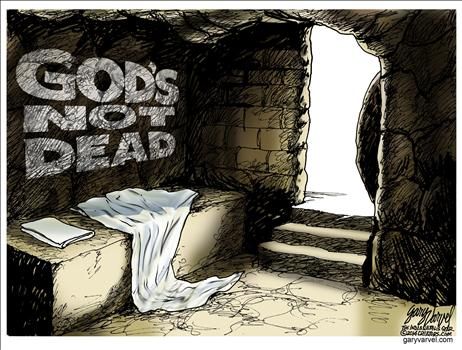
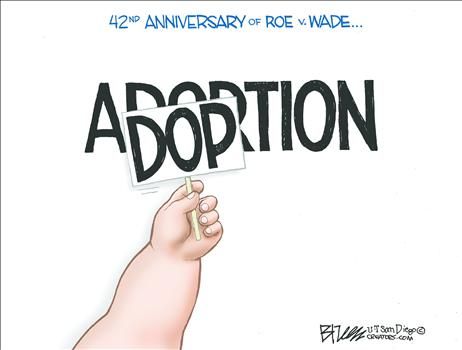
[Dont miss this week's : 1) Sunday Special; 2) "Truth That Transforms" (Sunday; 5pm, ch. 55.1, Orlando); 3)"Cross Examine* (Mon., 52.2, Orlando,)and 4)Worldmag.com editorial cartoons.]
Pulpits and politics http://online.worldmag.com/2011/08/08/pulpits-and-politics/
by Janie B. Cheaney August 8, 10:19
,... there may come a time for pastors to speak to political issues. And one of those times may be Pulpit Freedom Sunday, scheduled for Oct. 2 this year.
The Alliance Defense Fund (ADF) organized the first Pulpit Freedom Sunday in 2008 as a way to challenge the Internal Revenue Service. The IRS has exercised a creeping control over what pastors in the United States can say ever since 1954, when Lyndon Johnson found himself in a bruising Senate campaign. His opponent had the backing not of the local church but of right wing organizations that castigated Johnson for being soft on communism. Johnson’s amendment to the tax code prohibited any tax-exempt organization to support a particular candidate in elections, and it breezed through the Senate with no debate and no committee hearings. (Could it be that that august body of 98 incumbents saw the value of it for their own future campaigns?)
The whole issue of tax-exempt status may seem thornier than it really is. Some Christians, including me, have wondered whether churches shouldn’t just bite the bullet and pay the taxes in return for political freedom. Or maybe it’s just the Christian thing to do; as Paul says in another context, “Why not rather suffer wrong?” (1 Corinthians 6:7).
Presumably, the IRS, deep in its cold bureaucratic heart, believes it’s doing its best to accommodate free speech in churches. The agency has tried to delineate what nonprofit groups can do in the context of a political campaign. Every election cycle it sends a friendly reminder to pastors that they can advocate for issues (in a limited way) but not for candidates. What’s wrong with that?
The ADF sees potential disaster in that. “The power to tax is the power to destroy,” wrote John Marshall (1819) in the McCulloch v. Maryland case, which involved a bank, but the ADF applies Marshall’s statement to the Church—in fact, all faiths.
Regulations on speech from the pulpit reveal a fundamental misunderstanding about God-ordained institutions. The IRS sees its bestowal of tax-exemptions as a benefit it graciously grants. This puts the church under the heel of the state, no matter how lightly that heel rests. If the church is to be salt and light as an institution (I’m not speaking of individual Christians here) she must be free. The restrictions not only have a chilling effect on what pastors say from the pulpit, but they also hinder free discussion among Christians about what is appropriate.
Should a Baptist pastor, for example, tell his congregation that if they vote for a certain candidate they should leave the church? That’s a subject for legitimate debate among Christians, but if the IRS has already muscled in and revoked tax-exempt status, the issue is moot. The ADF does not approve all pastoral positions, but insists on the right for pastors to speak freely and subject their views to Christian judgment, rather than government.
That’s why Pulpit Freedom Sunday was established in 2008 with a handful of pastors, and expanded to include about 100 pastors last year. It’s a direct challenge to the principle of government restriction. On that Sunday, pastors record their sermons and send them to the IRS with a demand to be audited. So far the IRS has not responded, suggesting that its code is not as clear-cut as it claims. The ADF invites more pastors to participate this year, and in time hopes to force a reconsideration of the Johnson Amendment. Followed by its abolishment.
State churches (supported by taxes) were the pattern in Europe, eventually leading to empty churches. IRS restrictions could have the same effect here—if not empty churches, empty sermons. If the state claims the power to restrict speech on political issues, what will keep it from restricting doctrinal issues? As the personal becomes more political, nothing at all.
Friday, August 26, 2011
Thursday, August 25, 2011
#115 - The Food Stamp Party is Stimulating Poverty
[Dont miss this week's : 1) Sunday Special; 2) Truth That Transforms (Sunday; 5pm, ch. 55.1, Orlando); and 3) Worldmag.com editorial cartoons.]
Posted by Daniel Horowitz [http://www.redstate.com/dhorowitz3/2011/08/17/the-food-stamp-party-is-stimulating-poverty/] Wednesday, August 17th
The loss of jobs is only half of the result of the government interventionist equation. The other casualty of an economy driven by taxation, regulation, litigation, subsidization, monetary intervention, and debt is the crippling cost of living for all Americans. [Yes, I was about to say middle class, but we would be wise to eradicate that sort of socialist innuendo from our vernacular.]
Earlier today, the latest wholesale inflationary numbers were released. The core PPI rose 0.4% in July, while year over year PPI is now close to a three year high at 7.2%. Additionally, food prices rose another 0.6% in July. These numbers are quite disconcerting, given the sharp slowdown in economic activity. The higher wholesale costs are inevitably passed down to consumers, forcing them to pay more for basic products, such as energy, food, and transportation.While there are many cyclical factors that affect the price of food and fuel, and by extension, everything else; nonetheless, clearly central planning from the government has kept prices artificially high.
The government has foisted the ethanol beast upon every consumer of food and fuel through mandates, subsidies, and tariffs. This has created such a market distortion that 44% of all corn grown in this country is diverted for the production of ethanol. Corn prices continue to spike, engendering a cascading effect on much of the food chain. Despite the universal understanding that these policies have raised the cost of most major food items and gasoline, big-government statists in both parties continue to exhibit contumacious arrogance by refusing to repeal them.
Aside for the ethanol boondoggle, the rest of Obama’s energy agenda speaks for itself; a no-energy agenda. The administration is using every tool at its disposal to impound our oil, gas, coal, and nuclear power resources. Concurrently, Obama has sucked out all the energy investments and diverted them for 14th century style productivity; green energy. Those investments have really turned out swell for Big Solar. This is perhaps the most regressive tax on “middle class” Americans because the cost of transportation affects food prices, in addition to gas prices.
Finally, we have the plethora of spending from both fiscal and monetary stimulus that has devalued the dollar, thereby contributing to the rise in commodity prices. While the Fed issues easy money and the Treasury borrows it by the trillions, the weak dollar is wiping out the savings of the current generation. The next generation won’t have to worry about savings because all of their income will be used to service the debt.
So what is the motive behind this perfidious destruction of our savings and purchasing power? What is the end game?
Not surprisingly, the solution to every government-induced problem is…another government solution. You see, in the inane and insane cycle of government, the statists gleefully anticipate the creation of poverty resulting from their economic interventions, so they can subsidize the poverty with handouts. In this vein, Secretary of Agriculture Tom Vilsack’s comments in praise of record food stamp enrollment should come as no surprise:
Liberals don’t view welfare and food assistance as necessary evils; they view them as necessary virtues that stimulate poverty, and in turn, dependency on the Democrat Party. Perhaps, we should start a war with aliens, and then hand out food stamps to fund the war – and we will enjoy the motherload of stimulus.
The factors that drive up the cost of living and reduce income will serve as the bread and butter issues of the campaign for the White House. Americans want a paycheck; not a food stamp. And hopefully, they will give a pink slip to those purveyors of economic ruin that currently occupy the White House.
[bold and italics emphases mine]
Monday, August 15, 2011
#113 - Needing A Leader, We Get A Blamer
Courtney Nash - Did you hear about that 16 year-old girl here in Central Florida who died over the weekend possibly from an amoeba she contracted while swimming in a river near her home? As I hope you'll pray for Courtney Nash's family and friends as they deal with her grief,I'd like to make two observations: 1) The suddenness of her death serves as a reminder of how none of us knows the length of our days. We can only pray that through her untimely death, many youth especially will be led to consider how transient life is and will consider their lives from a Biblical and eternal perspective. 2) It is said that at age 14 Courtney signed d an organ donor card. It is said that as a result 7 people have benefited from her life-giving ecision. It makes me wonder how anyone would not consider being an organ donor. [I believe Ive been an organ donor since I first learned to drive 44 years ago.]
May we all begin to pray DAILY that next year's election will yield us a leader who actually has proven strategies to help our economy finally recover from its destructive downturn and who will support a limited governement view that does not shred our Constitution.
Obama's Tour of Denial and Blame/ morningbell@heritage.org (The Heritage Foundation)
It's being billed as a listening tour—a three-state journey across the Midwest where President Barack Obama will hear directly from Americans about the economy and talk about his ideas for job growth. Instead, though, it has the characteristics of a political campaign swing, and the rhetoric the President has brought along for the ride is marked by a desperate effort to blame someone other than himself for America's economic woes.
The President's tour began yesterday in Cannon Falls, Minnesota, where in one breath he pointed his finger at Washington's broken politics and in the next he blamed "a string of bad luck ... a bunch of things taking place over the last six months that were not within our control."
'You had an Arab Spring in the Middle East that promises more democracy and more human rights for people, but it also drove up gas prices -- tough for the economy, a lot of uncertainty. And then you have the situation in Europe, where they're dealing with all sorts of debt challenges, and that washes up on our shores. And you had a tsunami in Japan, and that broke supply chains and created difficulties for the economy all across the globe.'
As much as the President would like to bill his three-state tour as an exhibition in listening or leadership, it's more of an exercise in cognitive dissonance—of blaming everything but his own policies for the reality of America's dire economic straits, rather than taking responsibility for his presidency. That reality has manifested itself in a big way. In every state, a vast majority of Americans see the economy as getting worse, according to a new Gallup poll. The only exception is in Washington, D.C., where taxpayer spending has feathered the nest of the federal government, creating a cushion from the harsh existence of 9.1 percent unemployment, an average duration of unemployment hitting a record high of 40 weeks, and a tepid pace of economic growth that could leave joblessness at permanently high levels. Contrast Obama's results with the promise of his presidency, as articulated in his inaugural address:
'The state of our economy calls for action, bold and swift. And we will act, not only to create new jobs, but to lay a new foundation for growth. We will build the roads and bridges, the electric grids and digital lines that feed our commerce and bind us together.'
Lest America forget, President Obama had two years of a Democrat-controlled Congress to effect that bold and swift action. And boy, did he take action. He and his liberal allies in the House and Senate gave America a $780 billion stimulus that the President promised would save or create 3.5 million jobs by the end of 2010. (He came up 7.3 million jobs shy.) And then there was the 2,700-page behemoth known as Obamacare, the 9,000-Earmark Omnibus Bill, $3.22 trillion in new debt, a $26.1 billion government union bailout in the summer of 2010, the $3 billion Cash for Clunkers program, and the Dodd-Frank Wall Street Reform bill.
Somehow, though, all that action was not enough. So in January, the President used his State of the Union Address to convey to America that he was singularly focused on job creation. And here America sits, seven months later, watching President Obama tour the Midwest delivering that same message, this time calling for piecemeal job creation policies including more stimulus and infrastructure spending, a renewal of the payroll tax cut that was initially passed in December last year, tax credits for companies who hire veterans, a trade deal that he fails to send to Congress yet blames them for not passing, and tax increases on job creators. Though the President calls his ideas new and bold, he's only delivering more of the same tired thinking that has left America in an economic rut.
On top of the spending and debt, the President has promulgated stifling regulation while calling for job-killing tax increases. Meanwhile, his Administration is going out of its way to work against job creation—the National Labor Relations Board has taken action against the Boeing Company for creating jobs in right-to-work South Carolina while also pushing for pro-union policies that harm employers and workers.
Fortunately, the President's way is not the only way. Rather than going back to the Keynesian well and relying on the hand of government, the President and Congress should restrain government and allow entrepreneurs to thrive. That doesn't require a listening tour and placing blame. That requires being a leader and recognizing that the policies of the past two and a half years have not worked—that it's time for a new way, and a new speech.
[bold and italics emphases mine]
#114 - 10 Top Reasons Obama Won't Win Re-Election
[Human Events]http://www.humanevents.com/article.php?id=45480 08/13/2011
[Although the next Presidential election is not for more than 14 months, at this time there are many factors which point to President Obama being denied a second term in office. This is incredible as just 6 months ago this seemed most unlikely. Whether or not you are a supporter of the President, these are factors worth considering for now at least.] ...
1. Jobless rate too high: With the latest Labor Department report showing the unemployment rate at 9.1%, jobs will likely remain the No. 1 issue for voters. Well over 2 million jobs have been lost since Obama took office, and he wasted a trillion dollars on a stimulus bill that didn’t stimulate. Unfortunately for the American people, his policies will keep the jobless rate high, right up to November 2012.
2. Economy in doldrums: It’s not just jobs, but everything about the economy remains snake-bit. With housing slumping and the stock market tanking, all Americans are feeling the impact of the down economy. With the threat of a double-dip recession looming, don’t expect a turnaround in time to help Obama’s reelection.
3. ObamaCare looms: With health care costs continuing to rise, it is clear that ObamaCare wasn’t the answer. As the implementation of the highly unpopular health care measure nears, more workers will be dumped from their employers' health care plans, taxes will rise and fewer doctors will be available—giving voters more reasons to dump its architect.
4. Out-of-control debt and credit downgrade: The debt-ceiling deal did little to fix the long-term debt problem, as the U.S. is still on tap to borrow $7 trillion over the next decade, adding to the $4 trillion Obama has already racked up since taking office. With the S&P downgrade, Obama goes down in history as the first President to lose America’s AAA credit rating.
5. Depressed base:Progressives are having buyer’s remorse and are trying to convince everyone that Obama is not even much of a liberal. The anti-war left certainly won’t be out in force on Election Day. Nor will black turnout match 2008’s historical number. More of the young will stay home. The excitement of electing the first black President has worn off and even his staunchest supporters are disappointed that Obama hasn’t fulfilled their expectations.
6. Opposition energized: The Tea Party didn’t even exist in 2008, and the 2010 midterm elections showed the country rejects the President’s big-spending policies. No matter which Republican gains the party’s nomination, expect an energized grassroots opposition to Obama’s second term.
7. Changes in battleground states: The terrain that Obama faces in his reelection bid will be more difficult to navigate in 2012 than four years ago. He starts out by losing six Electoral College votes from states he carried in 2008 due to population changes registered by the 2010 Census. Then the 2010 midterm elections saw Republicans win governors’ races previously held by Democrats in key battleground states such as Pennsylvania, Ohio, Wisconsin and Michigan—all states Obama won in 2008.
8. Foreign policy mess: From the ... mixed signals given to Middle East protesters, from the Russian “reset” to China’s economic belligerence, there is not much that Obama can tout as a foreign policy success. Now with deficit hawks setting their sights on the Pentagon, Obama is likely to preside over the dismantling of America’s superpower status.
9. Media less a adoring: Obama will still have most of the media on his side for his reelection bid, but they certainly won’t be getting thrills up their legs, admiring the crease in his pants, or writing how the seagulls were awed. Even Obamaphile Chris Mathhews has turned on the President, saying a recent Obama speech sounded like a Fox News commercial, a harsh epithet coming from the MSNBC host.
10. Aloof, inept: Now that America has seen the President up close for nearly three years, the magic that many believed in during his hope and change odyssey is clearly gone. His aloof personality and scolding partisanship will not endear him to the electorate this time. As his falling approval ratings attest, he increasingly looks pathetically inept and not up to the job he was elected to do.
--------------------------------------------------------------------------------
HUMAN EVENTS is the news source President Reagan called his "favorite newspaper" and we still hold high the Reaganesque principles of free enterprise, limited government and, above all, a staunch, unwavering defense of American freedom.
Wednesday, August 10, 2011
#112 - Sunday Special- When Riding A Roller Coaster, Scream First, Then ...
[Be sure to check out this week's broadcast of "Truth That Transforms" (formerly The Coral Ridge Hour) today (5 pm, ch. 55.1, Orlando) Also, check out the ediotrial cartoons at www.Worldmag.com]
Panic. Worry. Anger. Fear. Regret(should I have bought gold when it was way cheaper?). Or maybe "It's been lovely but I have to scream now." I'm sure that you can add a few words [I hope no expletives (: ] to that list that describes my emotions when the stock market tanked day after day this past week, giving the sensation of riding a roller coster. As a Christian, we do in our gut trust God but there are times when we want to scream,"Hey, did you really have to let that happen?!"
Well, over 30 years ago, I had something happen to me that might be instructive as well as encouraging for you. Being in full-time ministry, I was then going on a community college daily to meet with students and to share Christ with those with whom God gave me opportunity One day, I decided to take my camera to campus to take some pictures and carried it in my hands so that I would remember to use it. Toward the end of the day, I stopped by to talk with a student who was sitting on a bench. I somewhat remember placing the camera on the bench on my right and turned to my left to engage in conversation. After awhile, the conversation ended and I got up to walk off campus with the guy. When that walk ended up at the school parking lot, I just went to my car and went on home.
Shortly after walking through the front door, I suddenly looked at my hand and realized I was not carrying my camera. I immediately realized that I had left it on that bench back at the school. In a panic, I jumped in my car and sped to the campus and ran to that bench, but the camera was gone. After berating myself for being so careless, I suddenly had the thought of going to the administration office to see if someone might have found it and turned it in. When I explained what had happened, not only was I told no one had done that, but the woman actually broke out laughing, saying,"Do you really think that if someone found a camera they would turn it in? Of course, theyre just going to keep it." Suddenly, I not only felt stupid but felt humiliated and embarassed.By the I got home, I was really upset. After a few moments, I just sort of took a deep breah and said something like,"Okay Lord,I give up. I acknowledge that it was after all Your camera and so if you want to take it from me that's up to you." I remember opening my eyes then feeling a great peace and then started to do something else.
Just then, the phone rang and it was my Mom calling from many miles away at my parents' home. She immediately said, "Did you lose your camera?" to which I believe my jaw dropped open. When I asked her how she knew that, she said she just got a call from the school saying that someone had just turned in a camera with my name and old (their) phone number on it. I immediately drove back to the school and sure enough they had my camera. (Unfortunately, I don't recall being able to have it returned to me by that very office worker who had only an hour before laughed at me. Needless to say, that would have been so sweet!)
As I overflowed with thankfulness when I got back h0me, I sat for a moment to think about what had happened. I felt the Lord reminding me that I was merely a steward of my posessions and that in truth God is always the real owner. It was though God took the camera from me to check my understanding of that truth, and when I was finally willing to entrust it to him rather than get upset at "my" loss, He not only gave me His peace but He even returned the camera. I always recall that incident to remind me to hold on to my posessions - yes, especially my savings - loosely. After doing my best to care for the things I am steward over, I need to rest in however He sovereignly chooses to dispose of those posessions. As I once told someone who asked me if I was sure I had enough money saved up to live out my life, even if I lose every dime I am steward of, it just may be God's way of giving me the opportunity to minister to the homeless as one of them!
So, my friend, do your best to invest your money wisely - as God gives you wisdom - and then, when you experience economic uncertainty, scream first, but then remember to hold on to your posessions lightly, remember that you are but stewards of them, and entrust them to the care of God, who is the ultimate owner of all things, and leave the results to Him. As the Scripture teaches, "Cast all your anxiety on Him, because He cares for you." (I Pet. 5:7)
(Postscript: It's similar to when i inherited a huge sum of money when my parents died. Someone at church said that I must be excited. I evidently shocked her when I paused and said, "No, I'm acatually afraid." when she incredulously asked me how that could be, I said, "Because I know the money all belongs to God and I'm responsible for how I spend every penny of it.")
#111 - The London Riots - Living Without God; Making Too Much?
[I present below 2 articles I've come across that address what has been behind the riots taking place in London. The first one presents a Christian view whereas the second one speaks more of how there are parallels for what has been happening in America. I believe they are both worth your time.]
P.S.- Please be sure to check my Sunday Special on my essay on a Christian response to economic uncertainty.
[bold and italics emphases below MINE]
No Shock that London is Burning - Dale Hurd CBN News Sr. Reporter; http://blogs.cbn.com/hurdontheweb/archive/2011/08/09/no-shock-that-london-is-burning.aspx August 9, 2011
"Why, exactly, is it wrong to loot and to burn?" Imagine hearing this question from one of the London rioters, if you were to stop them as they were lifting a sweet flat screen from a shop in Brixton or Hackney, and if they didn’t just give you a violent shove out of their way instead. If they did ask you this question, it might even be sincere, accompanied by a puzzled look. When you live on the bottom strata in a post-Christian moral vacuum, it’s not about right or wrong, but simply about have or have not.
The destruction began after a shooting involving London Police and has spread to several cities. Some news agencies and politicians have tried to tie the rioting to unrest over welfare cuts. This paints a respectable political veneer over top what is a feral mass crime spree. There undoubtedly is some political expression within the looting and burning, and that would be rage and revenge against a society and a system that the poor feel is stacked against them. To quote one rioter, "(We're) showing the rich we do what we want." One cannot pick on Britain exclusively, because America has this problem as well, and the crisis du jour in Britain is a crisis of the whole Western world, and it’s coming to a city near you. It is a crisis of faith.
Britain is a nation now so secular that when former Prime Minister Tony Blair wanted to end a speech to the nation with “God bless you,” it was nixed by his staff for fear of offending too many people. Some years ago, when a Mori poll for the BBC's Heaven & Earth program asked the British to name an 'inspirational' figure - Jesus finished at the bottom, not even close to "none of the above" or Britney Spears. The only real operating “moral” code in a post-Christian nation like Britain is a very vague, conditional sense of the Golden Rule used to reinforce the new national creed of selfishness and hedonism. The other is the threat of jail.
This is true across Europe and in many parts of America. One cannot expect young people, taught to believe that Christian morals are evil and oppressive, and that the only final reality is material and energy shaped by pure chance, to decide to honor law or property or their fellow man. Without God, it becomes the law of the jungle.
The Ministry of Making Too Much by John Hayward (HumanEventsDaily@email.humanevents.com) August 9, 2011
After I was critical of the tactics used by striking union members against Verizon, I received several responses to the effect that vandalism and violence are justified because Verizon makes too much profit, and its executives make too much money. One correspondent defended union lawbreaking by citing Verizon executive Ivan Seidenberg’s $18 million annual compensation package. That sure is a lot of money, so I guess cutting fiber optic lines and stealing electronic equipment is justified. I know some young people in Britain who would enthusiastically agree. The BBC recorded an interview with two giggling teenage girls who explained,“It’s the rich people who have got all the businesses. That’s why all this is happening, because of the rich people. We’re showing the rich we do what we want.”
If you’ve been following the British riots at all, you’ve noticed the targets of looting and robbery have not been exclusively “rich people,” by any stretch of the imagination. Perhaps we could avoid confusion, both in America and England, by setting up a Ministry of Making Too Much, to declare the exact point at which increasing wealth completely erases the rights of an individual.The Ministry will need a large staff and lots of funding, because it’s got a big job ahead of it. There are many nuances that must be ironed out. Will the salaries of union executives and politicians be regulated too? Do entertainers and athletes also make too much money? Will the lifetime earnings of each individual and corporation be considered, or just how much they pulled down last year?
Since all the smart people inside the Beltway assure us that moving back to a system of greater economic liberty is impossible, maybe it’s time we went the other way, and created a powerful bureaucracy staffed by selfless public servants to strictly codify envy. At least we wouldn’t have to wait for Presidential speeches, rowdy union demonstrations, and riots to find out who we’re supposed to hate.
- For more about this action agsintst Verizon, check: Striking Union Extremists Imprison Verizon Replacement Workers In Pennsylvania, http://www.redstate.com/laborunionreport/2011/08/11/striking-union-extremists-imprison-verizon-replacement-workers-in-pennsylvania/
Monday, August 8, 2011
#110 - Credit Rating Downgrade - Why You Can't Blame the Republicans/Tea Party
Prayer Alert - Please continue to remember the families and comrade-in-arms of the nearly 3 dozen of our brave fighting men who perished in Afghanistan this past Saturday, and whose bodies are being returned to the US today. Pray that knowing Him will comfort them and that this tragedy will especially draw those who have yet to come into a relationship withh Him.
Left Rushs to Blame the GOP for S&P Downgrade
Posted by Erick Erickson http://www.redstate.com/erick/2011/08/05/left-rushs-to-blame-the-gop-for-sp-downgrade/ Friday, August 5th
The S&P has downgraded American credit from AAA to AA+, the first time in history. The left is scrambling to blame the GOP for this and is fixated on one paragraph
The issue here, however, is that while present law presumed the GOP tax cuts would go away, the policy presumption is that they would get extended. Likewise, this is not blaming the GOP. This is a statement of reality that the GOP wasn’t going to "Compared with previous projections, our revised base case scenario now assumes that the 2001 and 2003 tax cuts, due to expire by the end of 2012, remain in place. We have changed our assumption on this because the majority of Republicans in Congress continue to resist any measure that would raise revenues, a position we believe Congress reinforced by passing the act. Key macroeconomic assumptions in the base case scenario include trend real GDP growth of 3% and consumer price inflation near 2% annually over the decade." raise taxes.Consequently, because the GOP refused to raise taxes, the alternative needed to be more cuts.
And S&P clearly believes that the cuts the debt deal made were not enough. And who opposed big cuts? Why yes, a guy named Barack Obama and the Democrats.
"We view the act’s measures as a step toward fiscal consolidation. However, this is within the framework of a legislative mechanism that leaves open the details of what is finally agreed to until the end of 2011, and Congress and the Administration could modify any agreement in the future. Even assuming that at least $2.1 trillion of the spending reductions the act envisages are implemented, we maintain our view that the U.S. net general government debt burden (all levels of government combined, excluding liquid financial assets) will likely continue to grow."
The Democrats can spin this as blaming the GOP all they want since they clearly got outplayed and still saw a downgrade, but the S&P downgrade has nothing to do with any specific policy. In fact, S&P says "Standard & Poor’s takes no position on the mix of spending and revenue measures that Congress and the Administration might conclude is appropriate for putting the U.S.’s finances on a sustainable footing."
The whole focus is on the debt burden. And if taxes are not going to go up, as is reality, spending must go down.The left, spinning otherwise, is simply trying to escape blame.
Only the Tea Party Had a $4 Trillion Plan
Posted by Erick Erickson http://www.redstate.com/erick/2011/08/05/only-the-tea-party-had-a-4-trillion-plan/ Friday, August 5th
Here was the question to S&P exec John Chambers, and his reply:
Q: “There’s been a figure of $4 trillion dollars circulating as an example of the scope of fiscal consolidation measures that could work to stabilize the U.S. debt-gdp ratios. Could you explain how that figure was arrived at since it was mentioned in S&P’s reports and where it figures in S&P analysis?”
A: “First of all, that figure comes initially from the Bowles-Simpson fiscal commission, and it was embraced by President Obama in his April 13 speech and Paul Ryan in his counter-budget proposal. And so you had policy makers converging around the amount. Now actually the $4 trillion, depending on whether it is front-loaded or back-loaded, is not going to do the trick in terms of stabilizing U.S. government debt-to GDP ratios. But it takes you pretty far along. And I think a grand bargain of that nature would signal, you know, the seriousness of policy makers to address the fiscal issues of the United States, to actually stabilize the debt-to-GDP. The IMF says it takes 7.5% of GDP consolidation. I think we have more than that.”The U.S. annual budget deficit is now around 9% of GDP.
Chambers adds: "But $4 trillion would be a good down payment. We thought that..if policy makers could deliver the goods on that, then that would be a strong sign on our political scores and eventually on our projections on the fiscal side.” S&P has already said it may slash the Triple-A rating if a debt ceiling deal is not accompanied by what it deems is a credible plan to cut the $14.3 trillion federal [debt] by $4 trillion. The plan has “to have bipartisan support,” Chambers said. “If you have a plan that is only backed by one side or the other, even if you got it through, you would be faced with the prospect of it being unwound.”
So, S&P’s Chambers is saying the ratings agency wants to see at least a $4 trillion deal, one that would come with bipartisan support, too, because the ratings agency fears without that support, Congress will upend any debt-cutting plan. There was only ever one plan that did what S&P said was required — $4 trillion in cuts with bipartisan support. That’d be Cut, Cap, and Balance — a plan that cut $4 trillion and got bipartisan support in the House of Representatives.
As Democrats tonight, and some Republicans, lash out and blame the Tea Party for causing the United States to lose its credit rating, it is worth pointing out that only the Tea Party offered up a plan to avoid what happened.This is precisely why the GOP should have held the line.[emphais here mine]
Subscribe to:
Posts (Atom)