Sunday, August 21, 2016

#1687 (8/21) SUNDAY SPECIAL - "Faith on the Rise in Nepal - LOVE FOR THE LEAST OF THESE"

"Faith on the Rise in Nepal - LOVE FOR THE LEAST OF THESE" - By: Eric Metaxas| Breakpoint.org: May 12, 2016; http://www.breakpoint.org/bpcommentaries/entry/13/29278
daily_commentary_05_12_16
High in the Himalayas, Christianity is on the rise. And so are religious tensions.

If I asked you to name the places where Christianity is growing the fastest, you, being a well-informed BreakPoint listener, would probably respond “Africa” and/or “China.” And you’d be correct. The explosion of Christianity south of the Sahara is so great that a colleague of mine is surprised whenever he meets a West African immigrant who’s not a believer. And as we previously told you on BreakPoint, Christianity in China is growing so rapidly that, by one scholar’s estimate, there will be more Christians in China than in any other country by 2035.

But there are other, less-known places where the Good News is being heard and received. One of these is Nepal. When Americans think of Nepal—if they ever do—what comes to mind is an exotic blend of the Himalayas, “wind-swept prayer flags,” and temples, lots and lots of Hindu temples, with a few Buddhist stupas thrown in for good measure.

Until recently, that would have accurately summed up Nepal’s religious scene. In 1951, Nepal’s census showed no—that would be zero—Christians in the country. Ten years later, it showed just 458. Forty years later, the number had risen to 102,000 and ten years later, i.e., in 2011, it had risen to 375,000. What’s more, according to a report by the International Institute for Religious Freedom, Nepalese Christian leaders believe that this last figure underestimates the number of Christian by a factor of six: instead of 375,000 Christians there are closer to 2.3 million.

That would put the percentage of Christians at nearly 10 percent and rising, as opposed to the government’s claimed 1.5 percent. While Nepal is officially a secular country, it has an overwhelming Hindu majority that, historically, has tolerated a small Buddhist minority that poses no threat to the country’s Hindu identity.

By way of protecting this Hindu identity, Nepal’s interim constitution states that “no person shall be entitled to convert another person from one religion to another and shall not take actions or behave in a way that would create disturbance in another's religion.” This of course effectively outlaws evangelism. Yet Nepalese are converting to Christianity in large numbers.

Part of the reason is that the law is difficult to enforce. A larger part is that Christians have stepped into areas of need that neither the government nor the Hindu majority can or even will serve. As is the case in India, many of the converts to Christianity come from the lower castes. Even though, as in India, discrimination on the basis of caste is illegal, centuries, if not millennia, of custom and practice aren’t reversed by the action of a parliament sitting in the capital.

What makes a difference in the lives of these people is other people whose own faith not only rejects the idea of caste but also insists that in ministering to the “least of these,” they are ministering to God himself.

In yet another parallel to India, Nepalese Hindu activists aren’t pleased by the results. So much so that they may be willing to manipulate census figures.

What’s happening in Nepal is good news, indeed. It’s also a reminder than Islam does not have a monopoly restricting religious freedom, especially when it comes to Christians. Recently, a Lutheran pastor was found murdered in the Indian state of Jharkhand. His death is believed to be a part of a larger pattern of anti-Christian violence by Hindu nationalists.

So, in addition to thanking God for the spread of the good news to unlikely places, please keep these vulnerable brethren of ours in prayer.

[bold, italics, and colored emphasis mine]

RESOURCES
"Why Nepal Has One of The World's Fastest-Growing Christian Populations" - Danielle Preiss | NPR.org | February 3, 2016; http://www.npr.org/sections/goatsandsoda/2016/02/03/463965924/why-nepal-has-one-of-the-worlds-fastest-growing-christian-populations

"Christianity facing threat of being rendered illegal under Nepal's new constitution" - Rio Ribaya | Christianitytoday.com | August 11, 2015; http://www.christiantoday.com/article/christianity.facing.threat.of.being.rendered.illegal.under.nepals.new.constitution/61589.htm

"Christians become target for attacks in tribal Jharkhand" - Bhopal, India | ucanews.com | May 9, 2016; http://www.ucanews.com/news/christians-become-target-for-attacks-in-tribal-jharkhand/75986

"Why Is Christianity Thriving in Nepal?" - Jo Anne Lyon | ChristianPost.com | March 3, 2016; http://www.christianpost.com/news/why-is-christianity-thriving-in-nepal-158745/

"Hindu extremists focus on Christian influence in Nepal" - Ruth Kramer | Mission Network News | October 12, 2015; https://www.mnnonline.org/news/hindu-extremists-focus-on-christian-influence-in-nepal/

Saturday, August 20, 2016

#1686 (8/20) PRO-LIFE SAT: "Runner Sarah Brown Sacrificed Olympic Dreams and Rejected Abortion to Become a Mom"

"RUNNER SARAH BROWN SACRIFICED OLYMPIC DREAMS AND REJECTED ABORTION TO BECOME A MOM"- Sarah Stites, Aug 17, 2016| http://www.lifenews.com/2016/08/17/runner-sarah-brown-sacrificed-olympic-dreams-and-rejected-abortion-to-become-a-mom/ [AS I SEE IT: Thank God at least someone in the media chose to share this courageous story of selflessness. Now...where was the rest of the mainstream media? Was this woman's CHOICE not the kind of choice they like to promote among women, ie career and self over anything (or ANYONE) else? What do you think? - Stan]
sarahbrown
Women’s magazines are notoriously pro-choice. Therefore, when the tweet below appeared in my feed this morning, I thought I knew what to expect.

Abortion seemed liked a logical answer. After all, in 2014, senior editor of Elle Magazine Laurie Abraham penned a piece entitled “Abortion: Not Easy, Not Sorry.” In it, she wrote: “Nearly one in three American women will have an abortion by age 45. Why are we so afraid to talk about it—or to acknowledge that our lives would have been so much less than we hoped for without it? Why are we pressured to feel that we should regret our choice, and that there’s something wrong with us if we don’t?”

This kind of content had shaped my expectations. In fact, Abraham’s article could have been a perfect segue for the tale of an empowered woman who aborted the baby that got in the way of her Olympic dreams. Warily, I clicked on the link.

But what I got was a lovely surprise. The article detailed the inspirational story of Sarah Brown, an elite runner who discovered, while at the peak of her Olympic trials training, that she was pregnant—but she never even considered abortion.

“I was at top of my game and then, all the sudden, it was like I fell off a cliff. I felt so fatigued in my races, like I felt like I was running through sand. I couldn’t figure out what was wrong. By the time I found out I was pregnant, it was a lot of mixed emotions.” But she was excited too. “This is my first child and my husband and I did plan on having kids at some point, it just happened a bit earlier than we were expecting!” she told Elle’s Kristina Rodulfo.

In an interview with Alison Wade of Runner’s World, Brown revealed that she wanted to keep her child from the moment she heard the news. “It was one of those things where I wasn’t ready to have a kid, but also, as soon as I found out I was pregnant, I wasn’t ready for the thought of losing that kid. As terrifying as it was to become a mom, I knew that that was what I wanted,” she said.

In the ultimate display of true feminist choice, “she set her sights on both achieving her career goals and having her child,” Rodulfo wrote. The decision was a family affair. Brown’s husband and coach, Darren, was literally with her every step of the way. He often trained alongside Sarah, donning a weight vest to truly empathize. “I don’t know if I could have done a lot of the things I did if [my coach wasn’t my husband],” Sarah told Rodulfo, “just from a standpoint of him seeing me every day, working very closely with me, knowing how I’m feeling.”

What gave Brown these strong convictions and determination? Her bio on Athlete Biz gives a clue: “Sarah believes that her running talent is a gift from God and needs to be used for something more than her own personal gains.”

This summer, she had an opportunity to put her beliefs into practice. Although Brown was slated to place at the Rio Olympics, she never made it past the trials. But her inspirational reaction to the disappointment revealed her strong faith.“Today wasn’t the fairytale ending you dream about. But then again, this journey never really was about an ending, it’s a beginning,” she posted on Instagram. “A new chapter as a family of three. Thanks for all the support ❤ & you can bet you will continue to see this mama run #runmamarun”

Friday, August 19, 2016

#1685 (8/19) "The Facts Show Louisiana’s Floods NOT Caused by Man-Made Climate Change"

"THE FACTS SHOW LOUISIANA'S FLOODS NOT CAUSED BY MAN-MADE CLIMATE CHANGE" - Nicolas Loris / August 17, 2016 / http://dailysignal.com/2016/08/17/the-facts-show-louisianas-floods-not-caused-by-man-made-climate-change/?

The U.S. Coast Guard rescues locals from flood water Sunday in Baton Rouge, Louisiana. (Photo: Brandon Giles/Coast Guard/UPI/Newscom)

Is man-made global warming to blame for the heavy rainfall and flooding in Louisiana? Former Vice President Al Gore sure thinks so. And The New York Times ran a story with the title “Flooding in the South Looks a Lot Like Climate Change.” But the climate research suggests otherwise.

Speaking in Houston to train more grassroots activists on global warming, Gore said: “These kinds of record downpours—that’s one of the manifestations of the climate crisis.” The Times article led with: “Climate change is never going to announce itself by name. But this is what we should expect it to look like.”

Torrential rain and severe flooding tragically claimed at least 11 lives in southern Louisiana and affected more than 40,000 homes. Emergency responders and other volunteers rescued more than 30,000 people and 1,000 pets. 

But is man-made global warming to blame? Climatologists Patrick Michaels and Paul Knappenberger point to two recent studies that indicate not. In one study, two researchers at the University of Iowa specializing in hydroscience and engineering conclude that “over the last 65 years, the stronger storms are not getting stronger, but a larger number of heavy precipitation events have been observed.”

The larger number of precipitation events, however, were not a result of burning of conventional resources of energy such as coal, oil, and natural gas. The study finds that “the climate variability of both the Atlantic and Pacific oceans can exert a large control on the precipitation frequency and magnitude over the contiguous USA.”

In other words, changes in the ocean are the reason for these increases in precipitation.

Another study, published by the American Meteorological Society, analyzes model projections and actual observed trends in heavy precipitation throughout the U.S. The lead author is Karin van der Wiel of the National Oceanic Atmospheric Administration’s Geophysical Fluid Dynamics Laboratory. Van der Wiel and her team concluded “no evidence was found for changes in extreme precipitation attributable to climate change in the available observed record.”

Knappenberger also points to a NOAA study from June 1978, when the media and climate concern centered on the next ice age and global cooling. As he puts it: “Lower Louisiana is a climatologically prime location for massive precipitation amounts.”

What about globally? After all, man-made warming is supposed to be about global warming, right?
The latest report from the Intergovernmental Panel on Climate Change found evidence for increases, decreases, and no trend at all in flood activity or severity. The report says:

In summary, there continues to be a lack of evidence and thus low confidence regarding the sign of trend in the magnitude and/or frequency of floods on a global scale. Trends in local events, such as hail and thunderstorms, were also inconclusive.

So whatever your theory on climate change and floods is, the U.N.’s climate change panel has studies to back you up—which suggests a lot of uncertainty in the field.

Here’s the real kicker, though: Even if it were definitively conclusive that man-made carbon dioxide emissions contributed directly to more intense and more frequent storms, the Obama administration’s regulatory climate agenda would be a costly non-solution. The higher energy prices paid by Americans from shuttering coal-fired power plants, regulations on oil and gas extraction, and emissions restrictions on vehicles and trucks will be for naught. In fact, cutting off virtually all economic activity and bringing U.S. greenhouse gas emissions down to zero would moderate warming by only 0.137 degree Celsius over the next 84 years.

For the Al Gores of the world, it’s convenient to point to the Louisiana floods, Superstorm Sandy, Hurricane Katrina, or the tornado in Joplin, Missouri, as evidence of man-made global warming. The facts, on the other hand, are inconvenient.

[bold, italics, and colored emphasis mine]

Nicolas Loris, an economist, focuses on energy, environmental and regulatory issues as the Herbert and Joyce Morgan fellow at The Heritage Foundation. Read his research.

"I’m From Louisiana. Here’s the Flooding Story the Media Should Cover" - Norbert Michel / @norbertjmichel / August 18, 2016; http://dailysignal.com/2016/08/18/im-from-louisiana-heres-the-flooding-story-the-media-should-cover/?

Thursday, August 18, 2016

#1684 (8/18) "How to Talk About Gun Rights With Gun Control Advocates"

"HOW TO TALK ABOUT GUN RIGHTS WITH GUN CONTROL ADVOCATES" - Beverly Hallberg / August 17, 2016 / http://dailysignal.com/2016/08/17/how-to-talk-about-gun-rights-with-gun-control-advocates/?

Talking with someone who disagrees about gun rights can be tricky. (Photo: Jim Urquhart /Reuters/Newscom)

Guns are a tricky topic. Very rarely do you find voters ambivalent about gun violence, gun safety, etc. Someone is either strongly pro-gun rights or pro-gun control, which makes a civil conversation difficult to start or maintain. But the solution isn’t to avoid the topic.

As I mentioned in my last column, you may be the only conservative who tries to challenge a liberal’s worldview. No pressure. It may sound like a heavy weight to bear, but not if you’re prepared. So, let’s talk guns.

Here are a few strategies that work well:

     1.) Common Ground
           Even though the other side often demonizes those who support gun rights, it’s important that you not return the favor. Instead, work hard to find common ground on such a hostile topic. You will develop instant goodwill and buy some credibility as you support a viewpoint the media often finds “crazy.”

So, what’s the common ground? Whether pro-gun rights or pro-gun control, both sides are motivated by one general desire: safety. The goal is to keep people safe. One side aims to do so via tougher restrictions and therefore fewer guns in the hands of law-abiding citizens; the other side aims to do so via looser restrictions and therefore more guns in the hands of law-abiding citizens. The goal is the same—prevent future gun violence. The means to that end is the sticking point.

Start by acknowledging your shared goal.

     2.) Examples
          Personal anecdotes and stories can go a long way to diffuse a hostile topic like gun ownership. Humanizing your position will only strengthen your argument and paint a clearer picture of what you believe.
         For example, when I discuss the importance of gun rights, I like to highlight that I am a woman who values safety in an often unsafe city like the District of Columbia.  Since the police can’t be everywhere at all times, it’s important for someone like me to be able to protect myself.
        Another way to lend credibility to your argument is to highlight real-life, recent, or current events where having a gun could’ve saved lives. The shootings at both the Pulse nightclub in Orlando and the Bataclan theater in Paris are examples of long-lasting hostage situations that could’ve ended much sooner if someone on the scene had a gun.
      [Also] Don’t just tell your audience that more shootings happen in gun-free zones, cite examples to show when and how.

3.) Words

Sadly, in the age of the Kardashians, “Bachelor in Paradise,” and Snapchat, most Americans don’t know what the Second Amendment is, or even understand the phrase “right to bear arms.” Instead, use words that are easy to comprehend and evoke more emotion like “the right to protect yourself.”

Also, you can’t go wrong stealing the other side’s language like “fair” or “choice” (i.e.: “As a woman, it is important that I have the same rights to choose to defend myself…”).

In summary, find common ground by talking about this issue from a safety perspective, use real-life examples, and steal the left’s language to frame your narrative.

So, bite the bullet (pun intended) and speak up.

[bold, italics, and colored emphasis mine]

Beverly Hallberg is the president of District Media Group.

Wednesday, August 17, 2016

#1683 (8/17) "3 Ways to Talk About Conservatism With a Liberal"

"3 WAYS TO TALK ABOUT CONSERVATISM WITH A LIBERAL" - Beverly Hallberg / August 02, 2016 / http://dailysignal.com/2016/08/02/3-ways-to-talk-about-conservatism-with-a-liberal/? [AS I SEE IT: The following tips for engaging in a conversation with a liberal can be very helpful esp. when that person may make us feel intimidated. As we come into the home stretch of this election year, helping those who hold to liberal/progressive views to thoughtfully consider the conservative view rather than simply dismiss it out of hand may go a long way to causing that person to give second thoughts to how they vote this November. - Stan]

When millennials are starting more businesses than the baby-boomer generation there’s reason to question their dedication to socialism and an opportunity to use their entrepreneurism as a gateway to talking about free enterprise.(Photo: Frédéric Cirou/F. Cirou / Altopress/Newscom)

As the mantra of “Don’t discuss politics or religion” repeats like a drumbeat in your head, you settle on “How about that game?” Your desperate search for the safest question to ask a colleague as you wait for the morning coffee to brew is understandable. But you can find a way.

If conservatives refrain from engaging in the narrative, we let the media and politicians (ahem, President Barack Obama) paint us as crazy people who cling to “guns or religion.” That’s where this column comes in—a place to help you talk to the people in your life (think neighbors, co-workers, family, friends) about conservative issues. Trust me, it’s possible.

While I will explore a wide variety of relevant topics in the weeks to come, I’d like to start with something basic and broad: the term “conservative.”

Connecting - If you look at The Heritage Foundation’s definition, you find that conservatism is five pillars: free enterprise, limited government, individual freedom, traditional American values, and a strong national defense. So, there’s your answer, right? Just memorize and repeat when someone wants to know why you are conservative. Wrong.

There is no faster way to kill a conversation than to categorize your perspective like it’s a to-do list. When talking about any issue, you have to connect with the other person’s interests. And that starts by being a good listener.

If you find your colleague doesn’t give much insight into her ideology, ask questions. Find out what makes her tick by starting a conversation about her day at work or what’s going on in the news. It’s amazing how much you learn when you ask a question and then … stop talking.

Comment - Once you gain insight into what issues someone cares about, the real work begins. You now have a blueprint for how to approach the conversation in a way that resonates with him or her, not you. For example, if you find that your colleague talks about how expensive it is to run her side business, the free enterprise pillar is a good area to explore. Now, you’re off to the races.

Here are a few strategies that work well: 

1. Common Ground
     Don’t underestimate the power of establishing common ground. Doing so makes you seem reasonable and can go a long way in diffusing any tension or unwillingness to hear you out. If you’re in agreement with someone on the goal, like his business succeeding, he is more likely to stick around and listen to your solution.
2. Examples
     Don’t underestimate the power of relatable examples, which can help people visualize your point. Often, the conservative principles we talk about can seem very abstract. Examples put issues into context, especially when you can illustrate a point using a reference from their daily lives. For instance, if you want to promote free enterprise, talk about all the regulations their business currently faces and how there would be significantly fewer if free enterprise was more valued by our lawmakers.
3. Words
     Finally, you have to use the right words. Don’t even think about using the term “free enterprise.” Instead, steal a page from the liberals’ playbook: use emotion to push an agenda. Own words like “fair” or “choice,” and statements like “you know better than a bureaucrat in D.C.” Using emotional language will set you up for success.

Before you think that attempting a conversation is hopeless because “you don’t know how liberal my co-workers are,” keep in mind that people will listen if you talk about issues that matter to them. If done well, it’s possible they won’t recognize that you are approaching the conversation from a conservative perspective.

Take millennials. You may think it’s hopeless to talk to that generation about free enterprise since so many view themselves as socialists. But when millennials are starting more businesses than the baby-boomer generation there’s reason to question their dedication to socialism (Do they really know what socialism is?) and an opportunity to use their entrepreneurism as a gateway to talking about free enterprise.

So, talk to a liberal today. Employ the strategies we just discussed and see if you can have a meaningful conversation about conservatism on her terms. Identify her interests, choose one of the five pillars that align with her interests, and use examples.

No pressure, but you may be the only conservative that tries to challenge [his or] her world view. And if we are going to preserve the American dream, it’s going to take all of us doing our part by first talking to the people we know.

[bold, italics, and colored emphasis mine]

Beverly Hallberg is the president of District Media Group.

Tuesday, August 16, 2016

!#1682 (8/16) "The Dirty Little Secret Pot Pushers Don’t Want You to Know About"

"The Dirty Little Secret Pot Pushers Don’t Want You to Know About" - Cully Stimson / Alexandra Seymour / August 04, 2016 / http://dailysignal.com/2016/08/04/the-dirty-little-secret-pot-pushers-dont-want-you-to-know-about [AS I SEE IT: I wish every voter here in Florida could read this  article before they get sucked into falling for the "compassion" arguments of medical marijuana promoters. I can only hope enough are not fooled into approving the measure on the ballot in November. - Stan]

Many marijuana substitute drugs have been around since the 1980s. (Photo: Juan Luis Martinez GDA Photo Service/Newscom)

But what if there was a Food and Drug Administration-approved drug that gave you all the benefits of the active ingredients in marijuana, such as tetrahydrocannabinol (THC) or cannabidiol? What if that drug had been rigorously tested through clinical trials to make sure that it worked as promised, was properly dosed, and had no unanticipated side effects? And what if you could get that lawful drug from your doctor in pill or liquid form? And what if there were three such different FDA-approved drugs, and two more on the FDA-approved fast track?


Would it surprise you to know there already are three FDA-approved THC drugs and that at least five more are on the way? We suspect so, because the pot pushers—those that push smoked and edible marijuana as “medicine”—don’t want you to know about these safe alternatives.

Some of those FDA-approved drugs have been around since the 1980s. That’s right—the dirty little secret they hide from you is that you don’t have to smoke marijuana, eat it in a brownie, or chew it in a marijuana-laced gummy bear to reap the medicinal benefits of THC.

The three FDA-approved drugs are Marinol, Cesamet, and Syndros. Drugs like Syndros show great promise for countering today’s dangerous “medical marijuana” movement. In early July, the FDA approved Syndros as the first orally administered liquid form of THC. Like Marinol, the original oral cannabinoid to gain FDA approval in 1985, Syndros treats anorexia associated with weight loss in patients with AIDS, as well as nausea and vomiting caused by cancer chemotherapy.

Epidiolex is one drug currently on the FDA fast track. According to a recent press release from GW Pharmaceuticals, a study of 171 randomized patients suffering from Lennox-Gastaut and Dravet syndromes found that Epidiolex decreased seizure occurrence, was relatively well tolerated among patients, and generated no unexpected adverse effects.

Other cannabinoid-based medications on the international market today include Cesamet, another synthetic drug that treats nausea and vomiting stemming from chemotherapy; Cannador, which is currently used in Europe and has demonstrated potential to relieve multiple sclerosis symptoms and postoperative pain management; and Sativex, another GW Pharmaceuticals drug on the FDA fast track that treats spasticity caused by multiple sclerosis.

Since these are all medical cannabinoids, they do not require smoking. They are also safer to use because levels of THC can be monitored. Knowing these safer alternatives exist, ask yourself: Why? Why have the pot pushers kept this secret and why don’t they want you to know this? “The medicinal marijuana system in this country has become a bad joke, an affront to the concept of safe and reliable medicine, defying the standards that we have come to expect from the medical establishment,” Dr. Kevin Sabet, former senior adviser to President Barack Obama’s drug policy office, wrote in his book, “Reefer Sanity: Seven Great Myths About Marijuana.”

We can thank Ed Rosenthal and Richard Cowan for creating the current public perception of the so-called “medical marijuana” marketplace. In a video filmed many years ago, which we highlighted in this 2010 blog post, Rosenthal (former editor of High Times magazine) and Cowan (former director of NORML—the National Organization for the Reform of Marijuana Law) joked about the nationwide “scam” they started. They realized that if they convinced enough people that smoking marijuana was “medical marijuana,” that would be the beginning of a movement toward full legalization.

“Once there’s medical access, if we continue to do what we have to do and we will, then we’ll get full legalization,” Cowan explained. “I have to tell you that I also use marijuana medically,” Rosenthal joked. “I have a latent glaucoma which has never been diagnosed, and the reason why its never been diagnosed is because I’ve been treating it.”

But, according to Rosenthal, pleasure trumps any medicinal benefit he should derive from marijuana anyway. “There is a reason why I do use it,” he said. “And that’s because I like to get high. Marijuana is fun.” Sabet acknowledges that THC has potential therapeutic effects, but these do not come from smoking pot. (We don’t light any of our FDA-approved medicine on fire and smoke it, after all).

With the average strength of marijuana being five to six times what it was in the 1960s and 70s, the repercussions of marijuana and legalizing it are more evident than before. Some of these include higher risks of motor vehicle accidents, heart attacks, and impaired immune systems and short-term memories. Evidently, the pot pushers don’t want you to know this truth.

“America is being sold a false dichotomy: ‘We can either stick to our current failed policies, or we can try a ‘new approach’ with legalization,” Sabet said. “Sadly, this kind of black-and-white thinking conceals the fact that there are better, more effective ways than either legalization or incarceration to deal with this complex issue.”

Cannabinoid-based drugs are better alternatives because they reap the benefits of marijuana’s therapeutic components safely, as well as have the potential to become FDA approved if they aren’t already.

So the next time a pot pusher encourages a state to enact so-called “medical marijuana” laws, or goes for full legalization in violation of federal law, ask them: Why are they pushing an unsafe, untested product instead of pushing FDA-approved THC?

[bold, italics, and colored emphasis mine]

Charles “Cully” Stimson is a leading expert in national security, homeland security, crime control, immigration and drug policy at The Heritage Foundation’s Center for Legal and Judicial Studies and the Center for National Defense. 
Alexandra Seymour is a member of the Young Leaders Program at The Heritage Foundation.States have passed so-called “medical marijuana” laws under the theory that pot has medicinal benefits that can’t be produced by other, legal means.

"Stoned Drivers Are Killing More and More Innocent Victims" - Cully Stimson / May 12, 2016; http://dailysignal.com/2016/05/12/stoned-drivers-are-killing-more-and-more-innocent-victims/
"Ohio May Legalize Marijuana Today" - Natalie Johnson / November 03, 2015; http://dailysignal.com/2015/11/03/ohio-may-legalize-marijuana-today/ 

Monday, August 15, 2016

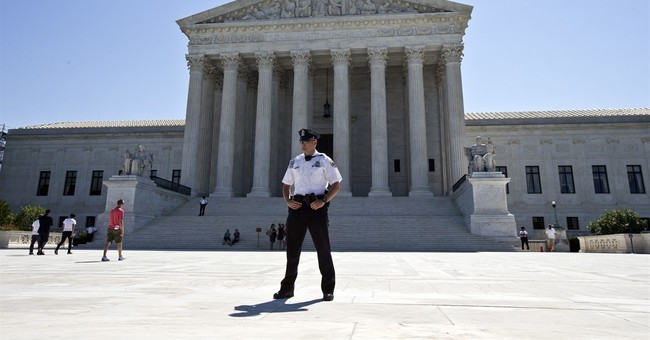
#1681 (8/15) "The Coming Battle Over the Supreme Court"

"THE COMING BATTLE OVER THE SUPREME COURT" - Jerry Newcombe |Jul 07,2016; http://townhall.com/columnists/jerrynewcombe/2016/07/07/the-coming-battle-over-the-supreme-court-n2188953 [AS I SEE IT: As this writer points out, the nature of American society has been shaped by the decisions of the Supreme Court esp. in recent years, too often resulting in negative consequences for our society. It stresses all the more what a difference it will make who is elected President (BUT ALSO that we have Senators who will only approve Supreme Court justices AND lower court federal justices) who will interpret the Constitution as it was written, and not in effect make new law. Who we vote for WILL make a difference for what America will look like for generations to come. Americans may not like the choices, but it's crucial we vote wisely. - Stan]
The Coming Battle Over the Supreme Court
  Consider the differences between the United States of 1965 and that of 1973. During those eight years the floodgates of pornography were opened. Abortion became legal and was becoming widespread. Many marriages floundered, and the divorce rate skyrocketed. Thankfully, positive civil rights gains were made; but despite that morality was beginning to tank.

Millions were beginning to live in sin, only they resented anyone calling it that. The “gay” movement was just getting started and marching down the streets. They were just a couple years behind the women’s liberation movement, which had also taken to the streets.

[Jeremiah] Denton once told me in a television interview, “When I came home… and saw all these signs---X-rated movies, massage parlors, these dumpy-looking places---and I asked [my wife] Jane, ‘What are those?’ And then saw the magazines on the magazine racks in the Naval Hospital, I was shocked.” He added, “I couldn’t believe that my country, a country which had succeeded in getting one nation under God placed back in the Pledge had gotten to this place.” Denton later went on to serve his country as a U.S. Senator to fight on behalf of Judeo-Christian principles, long before his death in 2014.

The Supreme Court had a lot to do with many of those changes, including pornography and abortion rights. During those eight pivotal years, we went from one nation under God to a nation that had basically lost its moral compass. Judicial activism refers to judges making laws from the bench, something they are not constitutionally charged to do---and I would argue, not permitted to do. But since when has the law ever stopped those intent on breaking the law anyway?

In America today, we are now virtually ruled by the Court. Every year we have to wait until the end of June or thereabouts to know the latest that our robed masters will hand down to us, as they come down from Mount Olympus, if you will, with their rulings.

The founders never intended it to be this way. Federalist #81, for example, makes it clear that the courts are to be the weakest of the three branches of government.

As a nation, we have been set adrift on a sea of relativism---and the high court bears much of the blame for that. The founding fathers gave us a Constitution to govern us. It was predicated on the Declaration of Independence, which said our rights come from God. Therefore, our laws should be in accordance with “the laws of nature and of nature’s God.” Natural law is disregarded today.

The next president could well set the course of the Supreme Court of the United States (SCOTUS) for at least a generation or two. Some members of the high court are older than 80. The next president will likely get to choose at least two or three justices.

Our founding document, the Declaration of Independence, upon which the Constitution is predicated, tells us we have the right to “life, liberty, and the pursuit of happiness.” But many court decisions are taking away these very things.

Who do you want to see choose the members of the Supreme Court? Where would the judges they choose stand on issues like life, marriage, religious liberty, property rights, the Second Amendment?

Those who hold to the notion that the Constitution is a “living document” are able to read into it whatever they want it to say. Jefferson could see early on that the germ of the dissolution of the Constitution was that it could become “a thing of wax” to be twisted this way and that in the hands of some of these justices.

Those who hold to the notion that the framers cared about what they actually wrote are those who make the best justices on the Supreme Court. Of course, the founders were far from perfect and knew the Constitution would need amending from time to time---as happened in the mid-19th century, to outlaw slavery forever.

What types of judges will the next president choose and the senate confirm? Will they move us toward freedom or toward tyranny? Will they recognize religious liberty or continue to strip it away? I think the courts are the most critical issue of this election.

If a Rip Van Winkle were to sleep or go away today, what type of America would he return to in 2024? To a large degree, that answer will be determined by “we the people” on November 8. For the sake of the next generation or two, let’s make it count.

[bold, italics, and colored emphasis mine]