Wednesday, September 7, 2016

#1704 (9/7) "LGBT Rights vs. Religious Freedom - NO MIDDLE GROUND?"

"LGBT Rights vs. Religious Freedom - NO MIDDLE GROUND?" - By: John Stonestreet| Breakpoint.org: August 30, 2016; http://www.breakpoint.org/bpcommentaries/entry/13/29787
daily_commentary_08_30_16
According to one Christian thinker, it’s time to get on the LGBT bus or be thrown under it.

Last week a thought occurred to me. I wanted to tweet it out but wondered whether it would be too incendiary. The thought was this: “It seems odd how confident we are that folks can lose their unwanted sexual parts, but can't lose their unwanted sexual attractions.” And then I thought of the stunning article by Christian ethicist David Gushee. And if you follow me on Twitter, you know what I did next. I hit “Tweet.”

In his article at Religion News Service, Gushee fired a warning shot across the bow of conservative evangelicals and religious traditionalists. He writes, “[y]ou are either for full and unequivocal social and legal equality for LGBT people, or you are against it. . . neutrality is not an option. Neither is polite half-acceptance . . . Hide as you might, the issue will come and find you.”

Now, there have been honest attempts by people on both sides of these issues to offer third-way sensible solutions, even compromises, that accommodate religious freedom and LGBT rights. Still, I think Gushee is right when he said these solutions will largely be rejected, shouted down by demands of a full embrace of the LGBT agenda.

What bothered me, however, deeply about Gushee’s piece, was how he framed the struggle of those who hold strongly to the historic Christian vision of sex and marriage. Conservative religious holdouts, Gushee writes, “are organizing legal defense efforts under the guise of religious liberty, and interpreting their plight as religious persecution.”

Jake Meador, writing at Mere Orthodoxy, was bothered too, using much stronger words than I am today. We’ve seen time and again, and Jake lists them, how federal, state, and local governments are forcing people to choose between their livelihoods and their faith. Meador goes on to point out what is really going on here—a clash of worldviews. 

And one side, at least, sees it as a total war. And that side, as I tweeted, sees biological physical reality as fully optional and malleable to our surgical and chemical demands, while at the same time seeing emotional inclinations and sexual attraction as fixed and permanent. This is nothing but pagan Gnosticism on steroids. Gnosticism, over which Christianity triumphed 17 or 18 hundred years ago, held that the body was at best inconsequential, at worst, outright evil. Physical, biological reality is no reality at all.

And that’s where we are today. When the Supreme Court ruled on so called same-sex “marriage,” as my friend Jeffrey Ventrella pointed out to me recently, it wasn’t just legislating morality. It was legislating metaphysics. It placed itself and our nation on the side of those who believe that, as Meador wrote, we “are completely autonomous, self-defining human individuals and [that] the government has an obligation to protect our right to self-definition.”

And all who question that definition, for example Christians—who believe that what God created was good and quite real—well, we’ll just simply have to go along. Or else.

So middle-ground solutions, though possible, are becoming increasingly implausible in today’s divided America—an America in which a Christian ethicist like Gushee sees no reason to accommodate Christians in a pluralist society.

So, where does that leave us? God willing, it leaves us right where we are, at our posts, obeying Christ, loving God and our neighbors. We continue to educate the young, heal the sick, feed the hungry, preach the Gospel. We continue, as Rod Dreher wrote about last week, mucking through the flood waters of Louisiana like Istrouma Baptist Church, bringing relief to the suffering—and I guarantee there you’re not tripping over volunteers from the LGBT Human Rights Campaign.

No matter how difficult Christian faithfulness might become—middle ground or no—we must continue to be the Church, Christ’s body on earth.

[bold, italics, and colored emphasis mine]

FURTHER READING AND INFORMATION - As John has pointed out,we might not find much middle ground in this particular struggle, but we are called as believers to take the high ground--to continue following Christ's command to go into all the world and share the good news of salvation, available to all who will believe.

"On LGBT equality, middle ground is disappearing"- David Gushee | Religionnews.com | August 22, 2016;http://religionnews.com/2016/08/22/on-lgbt-equality-middle-ground-is-disappearing/

"Keeping Faith Without Hurting LGBT Students" - Alan Noble | The Atlantic | Aug 15, 2016; http://www.theatlantic.com/politics/archive/2016/08/christian-colleges-lgbt/495815/

"On David Gushee’s Dishonesty" - Jake Meador |Mereorthodoxy.com | August 24, 2016;https://mereorthodoxy.com/persistent-dishonesty-progressive-evangelicals-religious-liberty-debates/

Loving My (Lgbt) Neighbor: Being Friends in Grace and Truth - Glenn T Stanton | Moody Publishers | October 2014

Tuesday, September 6, 2016

#1703 (9/6) " COFFEE TALK: How to Talk School Choice and Win"

DS_coffee-talk_v3
"HOW TO TALK SCHOOL CHOICE AND WIN" -  Beverly Hallberg / September 04, 2016 / http://dailysignal.com/2016/09/04/how-to-talk-school-choice-and-win/?

School choice offers “choice” and “opportunity” to kids stuck in failing schools. (Photo: Douglas Graham/ Loudoun Now /Newscom)

“Choice” always seems to be a winning argument for the left, except when it comes to education. Liberals repeatedly cry foul as soon as someone champions school choice at (what they perceive to be) the expense of public education. Conservatives claim the opposite is true—school choice empowers students by giving their families educational options.

So, it seems like we’re at an impasse with no middle ground in sight. Not true. As we’ve talked about these past several weeks, there are points of agreement to acknowledge, examples to use, and words to help frame your argument.

School choice is a nuanced and controversial topic, but not one that can’t be addressed.

1. Common Ground
     Whether someone supports school choice or not, everyone wants quality education for kids.
This plot of common ground is also why the debate can get so heated—education is an important component of society and the key to opportunity. As the discussion continues on how to achieve ideal educational reforms, remember that the person you’re debating most likely agrees that children should have access to quality education regardless of ZIP code or parental income. Start there.

2. Examples 
     Once you express common ground, the best way to win the “school choice” argument is by illustrating its successes, so show examples of how and where it’s worked.
 
     Tell the story of District of Columbia charter schools. Since school choice was established in 2004, more than 6,000 students have graduated at levels well above the public school average. Then transition to your community—how many kids in your neighborhood/city/state wait in line to walk through metal detectors because they’re placed in an unsafe public school? If a safer environment exists outside their ZIP code, give them the opportunity to attend. Only good comes when kids are allowed to learn in a safe environment.

     Tell the story of exceptional kids who are disadvantaged if they’re made to fit into the one-size-fits-all public school down the block. Every student is different, so the educational experience should be best tailored to him/her. A violin prodigy will be better served by attending a fine arts high school; a child with health needs may be better served by learning online.

And here’s the kicker—if  you think America’s public schools need reform, then you should champion school choice. It’s been proven time and again that public schools improve when school choice is allowed in the community.

3. Words
     This is an emotional topic, and liberals love to emphasize words like “choice” and “opportunity” and “fairness” in reference to education. But we say, STEAL THEIR WORDS.

     School choice offers “choice” and “opportunity” to kids stuck in failing schools. What’s “fair” is to give all kids a chance regardless of their ZIP code. Be emotional, not economic; make your argument about the people involved rather than the cost to the taxpayer. By stealing their words, you’ll also prove that school choice more effectively and efficiently achieves the goals liberals think failed big-government policies should.

Bottom line: find common ground, use examples, insert the right language, and you’ll be a champion in the fight to make sure every kid receives a quality education.

[bold, italics, and colored emphasis mine]

Beverly Hallberg is the president of District Media Group.

"Behind the Rise of Public School Costs: The Growing Number of Non-Teachers" - Lindsey Burke / Benjamin Scafidi / July 20, 2016 / http://dailysignal.com/2016/07/20/behind-the-rise-of-public-school-costs-the-growing-number-of-non-teachers/

Monday, September 5, 2016

#1702 (9/5) LABOR DAY: "The God of Wooden Plows - THE SPLENDOR OF THE ORDINARY"

"The God of Wooden Plows - THE SPLENDOR OF THE ORDINARY" - By: Mark Earley|Breakpoint.org: September 1, 2006; http://www.breakpoint.org/bpcommentaries/entry/13/13428
----------------------------------------------------------------------
Upside Down and Happy
----------------------------------------------------------------------
     Those of you who have seen The Passion of the Christ know that the film is difficult to watch because it reveals the horrific brutality of the scourging and crucifixion of Jesus. But the film does contain one humorous moment, which hints at the high value God places on work.

The scene shows Jesus at work as a carpenter, finishing a table. His mother comes over to examine it. Her opinion? The table is too high. Not to worry, Jesus responds; He’ll build tall chairs to go with it. Mary is not convinced. As she walks away, she mutters, “It’ll never catch on.”

The scene is a reminder that Jesus spent most of His life engaged in manual labor. Back in Galilee in the second century, the Christian apologist Justin Martyr said that during his lifetime it was still common to see farmers using plows made by the carpenter Jesus of Nazareth.

In his book, titled The Call, theologian Os Guinness reminds us that even the humblest work is important if it is done for God. “How intriguing,” Guinness writes, “to think of Jesus’ plow rather than His Cross—to wonder what it was that made His plows and yokes last and stand out.” Clearly, they must have been very well made if they were still in use in the second century.

Today, Christians typically exalt spiritual work above manual work. After all, what’s making a plow compared with preaching to multitudes, feeding the five thousand, or raising someone from the dead? But the very fact that Jesus did make plows—and made them well—suggests that any work can be done to the glory of God. Any work can be a genuine calling. A calling, Guinness writes, is anything we do “as a response to God’s summons and service.” When God calls us to some task—even if it’s something the world sees as lowly—that task is invested with what Guinness calls “the splendor of the ordinary.”

“Drudgery done for ourselves or for other human audiences will always be drudgery,” he writes, but “drudgery done for God is lifted and changed.”

Accepting drudgery is one of the ways we practice discipleship—learning to offer it up sacrificially to God. “We look for the big things to do—[but] Jesus took a towel and washed the disciples’ feet,” Guinness writes. “We like to speak and act out of the rare moments of inspiration—[but] He requires our obedience in the routine, the unseen, and the thankless.” We, His followers, must be willing to take on the humble and thankless tasks as well—and not become impatient with changing diapers, doing homework, or taking out the trash. 

During the week leading up to Easter Sunday, we tend to focus on the sacrificial elements of the life of Christ—of His willingness to suffer and die on our behalf. But we should never forget that the second Person of the Triune Godhead spent much of His life laboring in a wood shop.

If you are frustrated in your job or think the work you have to do is beneath you, just remember that for a season the One who turned water into wine and raised the dead to life . . . also made wooden plows.

[bold, italics, and colored emphasis mine]

For Further Reading and Information

Os Guinness, The Call (Word Books, 1998).

Michael Novak, Business as a Calling: Work and the Examined Life (Free Press, 1996).

John Beckett, Loving Monday (InterVarsity, 2001).

Read the Dialogue of Justin, philosopher and martyr, with Trypho, a Jew. [scroll down the page.]

Catherine C. Liddell, “Jesus the Carpenter.” [http://www.bartleby.com/246/923.html]

Dorothy C. Bass, Receiving the Day: Christian Practices for Opening the Gift of Time (Jossey-Bass, 1999).

Sunday, September 4, 2016

#1701 (9/4) SUNDAY SPECIAL - "Reflections on the Purpose of Life"

"REFLECTIONS ON THE PURPOSE OF LIFE" - Jerry Newcombe|Aug 11, 2016;
http://townhall.com/columnists/jerrynewcombe/2016/08/11/reflections-on-the-purpose-of-life-n2203819 [AS I SEE IT: What is most memorable in this article is the quote by the noted evolutionist/athiest Aldox Huxley. It is a shocking admission of WHY people CHOOSE to deny the existence of God - because they want to be their own God, determine their own morality. Wow! A good thing to remember when trying to understand an athiest you know. - Stan]
Reflections on the Purpose of Life
 I just turned 60. This milestone causes me to think about the rest of my life and specifically what life is all about.

I’ve received numerous well-wishes and humorous comments, such as “The Senility Prayer: Grant me the senility to forget the people I never liked anyway, the good fortune to run into the ones I do, and the eyesight to tell the difference.” Then there was this this inventive comment on Facebook, “Jerry, you should donate your body to science fiction.” But seriously, what is the purpose of life?
It’s natural to assume that life has a purpose, a meaning to it. But that itself is an assumption---predicated on a Judeo-Christian concept that God made us, and, therefore, life has meaning.

But evolutionists, for example, believe life ultimately has no meaning. Therefore, they can live as they please. Aldous Huxley wrote Brave New World. He was the grandson of Thomas Huxley (Darwin’s bulldog, who did much to champion the cause of evolution). In a 1944 book, The Perennial Philosophy, Aldous Huxley wrote, “The liberation we desired was…liberation from a certain system of morality. We objected to the morality because it interfered with our sexual freedom…The supporters of these systems claimed that in some way they embodied the meaning (a Christian meaning, they insisted) of the world.” Christian philosopher Ravi Zacharias once told me what Huxley was essentially saying, “I [an evolutionist] want this world not to have meaning because it frees me to my own passions and to my own sensually-driven life.”

Having purpose in life is critical. The great Christian novelist, Fyodor Dostoyevsky, once wrote, "If you want to utterly crush a man, just give him work that's of a completely senseless, irrational nature."

In his book, Man’s Search for Meaning, Holocaust survivor Victor Frankl told about one of the most demeaning assignments in the concentration camps. Workers were forced to dig piles of dirt and move them with wheelbarrows over to another part of the camp. Then the next day, they would be forced to move all that dirt back to where it had been the day before. Then the next day, they would be forced to repeat this meaningless task. And so forth. This was psychological torture, and it drove some of the prisoners mad. Some of them even lost the will to live because of it. Frankl said, “I can survive any ‘how’ as long as there is a ‘why.’” We were created for a meaningful purpose and when we live lives apart from true meaning, we can end up living lives of “quiet desperation,” as the phrase goes.

So does life have ultimate purpose, and if so, what is it? The oldest city in North America is named after St. Augustine, who lived in the 4th and 5th centuries. By all accounts, he was a brilliant philosopher and theologian. As a young man, he ran away from God, but his mother’s prayers brought him to true saving faith. Interestingly, her name graces a city on the West coast---Santa Monica, in California.

Most of us live between the two cities named after mother and son. When I first read The Confessions of St. Augustine---written about 380---I couldn’t believe how great a book it was. He shows clearly that there is a purpose to life, and it is bound up in God. In that book, he said, “You have made us for Yourself, Oh God, and our hearts are restless until they find their rest in You.” Knowing God is the purpose of life.

Centuries later, Blaise Pascal, another Christian thinker, would state that there’s a God-shaped vacuum in the heart and soul with every single person.

Ultimately, the question---what is the purpose of life?---can only be answered by the author of life, that is, God Himself. Surely, if there’s a God, there is a purpose to life. I like the purpose that the Pilgrims gave us in the Mayflower Compact of 1620. They said that their voyage was “for the glory of God and the advancement of the Christian faith.” What a noble purpose, and what an interesting way to begin the American experiment---to the glory of God and the advancement of the Christian faith.

Two decades later, the divines who met at Westminster in London and produced the Westminster Confession of Faith said that the purpose of life was “to glorify God and enjoy Him forever.”

And so, as I get older and hopefully wiser, I have come to the conclusion that the Apostle Paul was absolutely right in his no-lose approach to life: “For me to live is Christ and to die is gain.”

[bold, italics, and colored emphasis mine]

Saturday, September 3, 2016

#1700 (9/3) PRO-LIFE SAT: "Think Churches Should Do More to Stop Abortion? This New Program Will Help"

"THINK CHURCHES SHOULD DO MORE TO STOP ABORTION? THIS NEW PROGRAM WILL HELP" - CARE NET, AUG 30, 2016| http://www.lifenews.com/2016/08/30/think-churches-should-do-more-to-stop-abortion-this-new-program-will-help/ [AS I SEE IT: If but every church that claims to be pro-life was equipped as this program would enable it to be. I can never get over the contradiction that 40% of those who have abortion claim to be Christians! - Stan]
brentwoodbaptistchurch
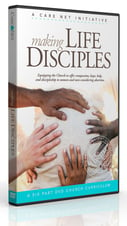
 Care Net, a nonprofit ministry that supports one of the nation’s largest network of pregnancy centers, has launched Making Life Disciples, a curriculum that will equip churches to minister to women and men considering abortion.

This first-of-its-kind program is designed to give churches the training and support they need to serve those in the church and the broader community who are facing unplanned, unexpected, or unexpectedly complicated pregnancies. The program was crafted out of Care Net’s decades of experience supporting thousands of community-based pregnancy centers across North America. Making Life Disciples takes this knowledge and applies it to the unique needs of churches.

The program originated out of empirical and anecdotal evidence that churches are not proactively engaged in ministry around abortion, even though abortions are not uncommon in the church. National data, such as that produced by the Guttmacher Institute, suggests that 54% of women who have abortions identify themselves as Christians. Care Net’s own research, released in November of 2015, found that 4 in 10 women were regularly attending church at the time of their abortion. (full report available at https://www.care-net.org/abortion-and-the-church-research?

Given the frequency of abortion in the church and the lack of specific ministries or programs in the church to address this crisis, Care Net created Making Life Disciples. “At Care Net, we believe that ‘life decisions need life support,’ and the church is the instrument God ordained to provide life support to women, men, and families to empower them to choose life for their unborn children and abundant life for their families,” said Roland C. Warren, president and CEO of Care Net.

This is especially true in urban areas, where there are often high concentrations of abortions and abortion providers, but few pregnancy centers. Even though Care Net currently supports a network of over 1,100 affiliated pregnancy centers across North America, relatively few of these centers are in urban areas. However, there are 350,000 churches in the United States, including many in urban communities.

COLD_CareNet_DVD_3D.jpg
Making Life Disciples will mobilize and equip these churches to become the only life-affirming entities in their communities addressing abortion. Additionally, even in communities with pregnancy centers, Making Life Disciples will create a bridge between those centers – which are set up for short-term support – and local churches, which are designed to provide long-term discipleship.

Additionally, while pregnancy centers primarily reach women and men who are not regular church attenders, Making Life Disciples is designed to reach those inside the church who may be unable or unwilling to visit a local pregnancy center, but are still in need of help with their pregnancy decision. Through providing such help, the church can then act as a conduit to the local pregnancy centers, who can continue to provide unique services such as free ultrasounds.

Dr. Tony Evans, Senior Pastor of Oak Cliff Bible Fellowship in Dallas, TX understands the unique role the church must play in ministering to abortion-minded women and men. “The pastor of a local church must somewhat view himself as a thermostat that sets the atmosphere and the temperature for how the church functions, particularly when it relates to people who are caught in circumstances such as unplanned pregnancies,” said Evans in a video produced for the curriculum.

Making Life Disciples is a comprehensive, six-part DVD curriculum, supplemented by printed leaders’ and participants’ guides. The sessions – such as “Pregnancy: Facing the Unknown,” “Connection, Communication, and Compassion,” and “Life-Affirming Alternatives” – are delivered by seasoned professionals of the family strengthening and pregnancy center movements, such as Roland C. Warren, Linda Cochrane, Cynthia Wenz, Ryan Bomberger, Jeanneanne Maxon, and Eric Scalise, Ph.D. Regarding the plan for the program, Mary Chapman, Care Net’s Director of Church Outreach and Engagement, said, “Care Net will work through denominations, individual churches, ministry networks, and its network of pregnancy centers with the goal of equipping 1,000 churches withMaking Life Disciples by 2020.”

“Because this is an issue of life, and God is the author of life, then we must be in life-related issues. For us it’s a priority and it should be a priority for any pastor concerned about comprehensive ministry,” said Dr. Evans in another video for the curriculum.

More information and supporting resources are available at makinglifedisciples.org and the program can be purchased at https://www.care-net.org/about-the-church-initiative?

Founded in 1975, Care Net supports one of the largest networks of pregnancy centers in North America and runs the nation’s only real-time call center providing pregnancy decision coaching. Acknowledging that every human life begins at conception and is worthy of protection, Care Net offers compassion, hope, and help to anyone considering abortion by presenting them with realistic alternatives and Christ-centered support through its life-affirming network of pregnancy centers, organizations, and individuals. Learn more at www.care-net.org.

[bold, italics, and colored emphasis mine]

Friday, September 2, 2016

#1699 (9/2) "What a School Letting Students Opt Out of Pledge of Allegiance Says About Our Patriotism"

"WHAT A SCHOOL LETTING STUDENTS OPT OUT OF PLEDGE OF ALLEGIANCE SAYS ABOUT OUR PATRIOTISM" - Jarrett Stepman / August 24, 2016 / http://dailysignal.com/2016/08/24/what-a-school-letting-students-opt-out-of-saying-pledge-of-allegiance-shows-about-our-patriotism/ [AS I SEE IT: This writer eloquently explains why the current discussion about a football player sitting down during the playing of our national anthem may be pointing to a serious problem of America becoming a "post-patriotic" society. It has concerned me for awhile now that churches shy away from even praying for our nation because that would somehow be supporting"nationalism" and thus wrong. To me patriotism is merely stating allegiance to a country that is "under God" and while it will never be perfect is still what we are called to be citizens of in this life. - Stan]

A Florida elementary school sent students home with a waiver from reciting the Pledge of Allegiance. (Photo: Nikki Boertman/Zuma Press/Newscom)

Can America thrive as a post-patriotic society?

A Florida elementary school recently caused a stir on social media when a man posted an image of his niece’s waiver from reciting the Pledge of Allegiance. The waiver form asked parents if they would like to opt their child out from “standing and placing his/her right hand over his/her heart” and reciting the pledge. The infuriated uncle wrote on Facebook, “My niece brought this home from school today…What is happening to our country?!?”

Florida students have been able to opt out of the pledge since 2000. The just over 30-word Pledge of Allegiance, written by Francis Bellamy in 1892, received an addendum of “under God” in the 1950s under President Dwight Eisenhower, but has remained a fairly constant and little-changed staple at schools and public gatherings for over half a century. While the specific merits of the pledge have elicited opposition on the left and right over the decades, the casual and increasingly dismissive treatment of even simple patriotic acts is a symptom of deeper trends in American society.The decline of patriotism in American life will lead to profound crisis for the world’s youngest civilization—which has been fortunate enough to maintain one of the oldest, and certainly the greatest, of political systems.

A June Gallup poll indicated that only 53 percent of adults are “extremely proud” to be Americans, a 17 percent decline since 2003. The numbers were dragged down in particular by millennials; only 34 percent of adults under the age of 30 reported being “extremely proud” to be citizens of the United States. These steadily declining numbers, more than economic malaise or any other factor, demonstrate the current fragility unity of the world’s greatest superpower.

In spite of recessions, economic setbacks, and widespread government dependency, Americans remain a dynamic and entrepreneurial people at heart. But these factors alone aren’t alleviating the fact that most Americans believe the country is on the wrong track, fueling the current populist mood of the nation.

The great French observer of American life, Alexis de Tocqueville, warned that “ … epochs sometimes occur in the life of a nation when the old customs of a people are changed, public morality is destroyed, religious belief shaken, and the spell of tradition broken.”

Tocqueville ominously wrote that the country in such a state: … assumes a dim and dubious shape in the eyes of the citizens; they no longer behold it in the soil which they inhabit, for that soil is to them an inanimate clod; nor in the usages of their forefathers, which they have learned to regard as a debasing yoke; nor in religion, for of that they doubt; nor in the laws, which do not originate in their own authority; nor in the legislator, whom they fear and despise. The country is lost to their senses; they can discover it neither under its own nor under borrowed features, and they retire into a narrow and unenlightened selfishness.

The decline in true or even symbolic patriotism is especially bad news for a country like the United States. The blending of disparate races, ethnicities, and religions into a lasting national identity has been one of the greatest and historically rarest triumphs of this country. Americans have traditionally embraced displays of patriotism to a degree that astounds and occasionally disturbs citizens of other countries. But it has been necessary for a civilization that has brought together so many diverse peoples under one flag.

The long-term American cultural project of assimilation is fraying and its decline could open up the cleavages that exist under the country’s surface. For most of the world, “nationalism” has symbolized ethnic identity more than love of country—in the wake of quickly declining patriotism, this will likely become the norm in the U.S. as well.

When using the phrase “land of opportunity” is labeled a “micro-aggression” by universities, and most students fail a basic civic literacy test, it is no wonder young Americans have little attachment to their country. They may learn that their only true ties are to the subgroups their leftist professors imbue with such importance, rather than to all of their fellow Americans.

While the trendy notion of being a “citizen of the world” is popular in Western, cosmopolitan societies, in a globalized world in which communities have broken down, individuals fall back on tribe or look to radical mass movements to fulfill this sense of loss.

The flippant way in which patriotism is being cast aside in this country makes it vital that Americans attempt to restore patriotic sentiment and understanding of the nation’s traditions for current and future generations. Leaders capable of articulating what has made America unique are necessary, as is a public that has a keen understanding of what ideas are at the cornerstone of the republic.

South Carolina’s new law requiring students to study the founding documents is one of many ways civic and patriotic attachment to country can be restored—and similar laws could at least provide a baseline for responsible citizenship.

In an 1894 speech, Theodore Roosevelt spoke of the need for “true Americanism” for the U.S. to be a great country. He said: "We shall never be successful over the dangers that confront us; we shall never achieve true greatness, nor reach the lofty ideal which the founders and preservers of our mighty Federal Republic have set before us, unless we are Americans in heart and soul, in spirit and purpose, keenly alive to the responsibility implied in the very name of American, and proud beyond measure of the glorious privilege of bearing it."

If the trends continue and America proceeds down the path of being a post-patriotic society, no election or economic boom will put the country back on the right track or restore sagging confidence in the country’s political institutions.

Patriotism and pride in the U.S.’ unique institutions and founding principles has been the glue holding together a country diverse in ethnic backgrounds and creeds. Without allegiance to the American experiment, we may find that our citizens choose ethnic ties or “global citizenship” as more meaningful than their hollowed out and meaningless American identity.

[bold, italics, and colored emphasis mine]

Jarrett Stepman is a contributor to The Daily Signal.

"THE STAR SPANGLED BANNER CELEBRATES BEATING THE BRITISH, NOT SLAVERY" - By: Billy Gribbin | August 30, 2016; https://www.conservativereview.com/commentary/2016/08/star-spangled-banner-celebrates-beating-the-british-not-slavery?

Thursday, September 1, 2016

#1698 (9/1) "Use These 3 Strategies to Talk to a Liberal About Income Inequality"

DS_coffee-talk_v3
"USE THESE 3 STRATEGIES TO TALK TO A LIBERAL ABOUT INCOME INEQUALITY" - Beverly Hallberg / August 31, 2016 /http://dailysignal.com/2016/08/31/use-these-3-strategies-to-talk-to-a-liberal-about-income-inequality/

The catchy word “inequality” breeds an immediate emotional response. (Photo: Uwe Umstätter/Westend61 GmbH/Newscom)

The phrase “income inequality” has a lot going for it. It’s catchy and memorable, and “inequality” breeds an immediate emotional response—contempt for the existence of an unfair policy and outrage that people might support it. Those who cry out in favor of ending it have successfully packaged their indignation as a pep rally for the masses; those who cry out against the existence of “income inequality” are seen as selfish and uncaring.

That’s quite a narrative to change, but it’s not impossible. They might have a good phrase, but you have a great argument.

Building on the strategies we’ve outlined in previous weeks, here’s how you can have a conversation with a liberal about “income inequality”:

1. Common Ground

     It may be easy to dismiss someone who is preaching from an economic handbook that’s a few shades closer to socialism than you’ll ever be. But don’t throw the baby out with the bathwater when talking with someone about “income inequality.”

     More than likely, the common ground here is that you, on both sides of the argument, want everyone to have an equal chance at living the American dream. That’s a good, solid piece of common ground if your aim is to see that no one is unfairly disadvantaged.

2. Examples

     Most important is to expose the myth that the pie is only so large and the rich get rich at the expense of the poor. The best way to do so is by using examples with a focus on the issue of income mobility—or, in other words, are we making it easier for all people to climb the economic ladder?

     Those beating the drum of income inequality to the tune of the rich paying their “fair share” often neglect the fact that the “rich” includes small business owners (by the way, usually not millionaires or even close). The more money small business owners have to pay in taxes to the government, the less money they can pay their employees, which leads to layoffs and/or the closing of businesses. And fewer jobs help no one, least of all those struggling to make ends meet. If you know of a business in your community that’s closed its doors because of too-high taxes, talk about it. It will resonate with those who want to stand up for local businesses.

     Another good example points to the real reason the poor remain poor—burdensome regulations that make it difficult to start businesses. The Daily Signal highlighted this issue a couple of weeks ago. All Lata Jagtiani wanted to do was make an honest living using her skill of eyebrow threading, but due to unnecessary regulations in her state requiring hours of training for something she already knew how to do, she was ultimately prevented from serving her clients. In the name of “safety,” Jagtiani wasn’t able to make a living and a valuable service was withheld. [http://dailysignal.com/2016/08/12/meet-the-salon-owner-fighting-eyebrow-threading-regulations/]

3. Words
     While the words “income inequality” aren’t threatening on a piece of paper, we know the phrase means something entirely different in political conversation since being hijacked by the big government side. Using this short phrase in a void isn’t a bad thing—but we all know we aren’t in Kansas anymore, Toto.
   
     If you’re trying to fight the bad policy that stands behind the phrase “income inequality,” a good place to start is to use different language—language that speaks to the heart of what you’re trying to say. Use phrases like “equal opportunity,” “hard work,” or “achieve the American dream” to better illustrate your point—it’s more effective to give someone the opportunity to succeed instead of handing out freebies.

    Also, talk about making it easier for all people to climb the economic ladder (ahem—income mobility) as a way to help your audience better visualize what you are talking about.

So, don’t shy away from a topic that can be tricky to navigate. Embrace the common ground of the American dream, use examples that show government interference is causing the poor to stay poor, and use the right words to unify instead of polarize.

[bold, italics, and colored emphasis mine]

Beverly Hallberg is the president of District Media Group.