Thursday, June 14, 2018

#2341(6/14) TODAY is the Army's 243rd Birthday:"The Value in Learning the Army’s History"

RAMADAN, the Muslim holy month , began on May 15th. Historically, persecution against Christians increases during this time. Pray for the safety of churches andChristians and that God would use churches to be salt and light to their Muslim friends during this difficult time.  PRAY FOR THE MUSLIM WORLD DURING RAMADAN - Download the Free 30-Day Prayer Journal - https://www.opendoorsusa.org/resource-pages/pray-for-muslim-world-during-ramadan/

"THE VALUE IN LEARNING THE ARMY'S HISTORY"Thomas Spoehr / June 13, 2018 / https://www.dailysignal.com/2018/06/13/the-value-in-learning-the-armys-history/ [NOTE: As you will note by the article noted after this one, TODAY is not only  the Army's 243rd birthday but it's also Flag Day in the US. With the choice of posting either article, I decided to post this one as it is less known that today is the Army's birthday. I still encourage you to check out the other article listed below. - Stan]
A row of Civil War-era cannons sit in Gettysburg, Pennsylvania. (Photo: Walter Bibikow /agefotostock/Newscom)

Thursday marks the Army’s 243rd birthday.On this day, soldiers past and present will be encouraged to pause and reflect on the years of service the Army has given the nation.
    The Army takes enormous pride in its history and heritage. The Second Continental Congress created the Army on June 14, 1775, when it authorized the formation of 10 companies of expert riflemen. These brave soldiers marched to Boston to support the local militia.
    The next day, George Washington received his appointment as commander in chief and shortly moved to take command at Boston.

Army Maj. Gen. Malcolm Frost recently announced a renewed focus on Army history in basic training with the goal of teaching recruits “what it means to be a United States soldier” and to connect them with the service’s heritage.
    Why should new soldiers understand the Army’s history? After all, the average American citizen knows very little about our history: According to a CBS News poll, in 1994 only 27 percent of Americans knew what the term “D-Day” refers to. A 2014 National Assessment of Educational Progress report revealed that only 18 percent of eighth-graders were proficient in U.S. history.

So why should the Army expect its soldiers to learn its history? What’s the point of teaching soldiers about the miserable conditions at the encampment at Valley Forge, Pennsylvania, or the D-Day assault on Omaha Beach, or the sacrifices by Gary Gordon and Randy Shughart in Somalia in 1993? Why not listen to those who say to “live in the moment” and just carry out orders? 

What do modern soldiers have to learn from the battles and soldiers of the past? It turns out, a lot. By understanding the actions of fellow soldiers and how they reacted and persevered under the most challenging of circumstances, today’s soldiers can be guided by their experiences.
    Sgt. Alvin York’s single-handed attack on German machine gun nests in WWI provides a classic example of bravery in the face of danger. Gen. Ulysses S. Grant, after having been nearly defeated on the first day of the Battle of Shiloh in the Civil War, told his subordinate William Sherman that night that they would “lick ‘em tomorrow,” demonstrating great perseverance.
   And Shughart and Gordon repeatedly insisted on being inserted in the midst of a raging firefight in downtown Mogadishu to help a downed aircraft crew. Their choice, which resulted in their deaths, provides a vivid example of how soldiers never leave fallen comrades.
   Lessons like these are hard to learn in peacetime. But through understanding Army history, soldiers better prepare themselves for the unforgiving crucible of combat.

Throughout its 243 years of history, the Army has never failed to answer the nation’s call. The Army flag has 190 campaign streamers attached to it, each attesting to tough campaigns and battles.

Some struggles have ended in defeat, like the 1776 Long Island campaign in the Revolutionary War. Others, success, like the 1991 liberation and defense of Kuwait. Steadfast through it all have been the determination, devotion, and the readiness of the American soldier, captured by the Army’s motto, “This we’ll defend.”

Happy Birthday to the Army.

Thomas W. Spoehr, a retired Army lieutenant general, is director of the Center for National Defense at The Heritage Foundation.

[italics and colored emphasis mine]
-----------------------------------------------------------------------
"The Meaning of the Stars and Stripes"Brad Wenstrup / @RepBradWenstrup / June 13, 2018 / https://www.dailysignal.com/2018/06/13/the-meaning-of-the-stars-and-stripes

Wednesday, June 13, 2018

#2340 (6/13) "Anthony Bourdain, Suicide, and Us - A Wake-up Call for the Church"

"ANTHONY BOURDAIN, SUICIDE, AND US - A WAKE UP CALL FOR THE CHURCH" - by John Stonestreet and David Carlson, Breakpoint.org, June 13, 2018; http://www.breakpoint.org/2018/06/breakpoint-anthony-bourdain-suicide-and-us/ [AS I SEE IT: Of all the places where individuals gather, you would think that the Church family is where people would feel most free to be vulnerable. But much too often - whether it's suiciede or some embarassing addiction ("sin area"/"weakness") - to admit you're struggling and that you don't hae it "all together" as a Christian is still uncomfortable for too many in the Church. Every Church needs to provide groups and other resources that people can feel free to go to speak up about thiings like depression and thoughts of suicide. It's to the Church's shame that such for individuals to have such freedom is so rare. - Stan
    An epidemic of staggering and tragic proportions is sweeping the country. And Christians are not immune.

   This man seemed to have it all. Celebrity chef, TV travel dude, and author Anthony Bourdain circled the globe, going to exotic places, eating the world’s best foods—whether at a West African fish hut or the finest restaurants in Paris. He lived in a multi-million dollar Manhattan condo. And last week, he took his own life.

Now, if you’ve ever watched the shows, “No Reservations,” or “Parts Unknown,” you know he was kind of a bad boy. Savvy and intelligent, yes. But irreverent, edgy, and sometimes profane. You couldn’t help but think, “This man needs Jesus.” Sadly, all that Bourdain had and had achieved was not enough to save him from what is now called “death from despair.”

And he’s not alone. His death came right after the suicide of New York handbag designer Kate Spade and a day after the CDC reported that between 1999 and 2016, suicide rates in all but one state in the U. S., across age, gender, and ethnic lines, increased. Suicides, in fact, are the second leading cause of death for people ages 15-34. Throw in the other “deaths of despair,” such as drug overdoses and complications from alcoholism, and we have a public health crisis of the first order.
   Given the state of our culture, it’s not surprising. People seem more isolated than ever before, despite—or perhaps in part because of—being more virtually connected. Loneliness and depression are epidemic and rising, and the mediating institutions of communities, like families, churches, civic organizations are struggling, to say the least. Social ties are fraying at an astonishing pace.In our society, it’s increasingly difficult for individuals to be spiritually, mentally, and emotionally healthy.

And Christians are not immune. I think of Rick and Kay Warren’s son, Matthew. And my friend, Wisconsin Pastor Bill Lenz. Thank God the church is starting to wake up to the problems of suicide and mental illness. But only starting to wake up.
   Today on a BreakPoint podcast, I talk with Dr. Aaron Kheriaty, who’s the Director of the Bioethics Program at UC Irvine. “The time has come,” Dr. Kheriaty told me, “for the church to have a serious conversation about mental illness, about reaching out to those who struggle with mental illness, providing pastoral care for them and their families so that they can truly feel integrated into the Christian community.”
   And that integration is essential. Dr. Kheriaty said, “The person who has a strong inner conviction of God’s love for them and his healing mercy and  . . . feels supported by the Christian community, that person is going to have a significantly lower risk” of suicide, “even if they are struggling with a serious [mental] illness.”

   I asked Dr. Kheriaty what advice he has for parents or family members who have a loved one who is struggling. First, he said, don’t lose hope. Recovery from mental illness is possible, but it’s a long, hard process. Second, speak to your pastor to see if he can recommend a mental health professional. If not, don’t be afraid to seek out a competent professional. Too often, Christians are automatically closed to the idea of medication, which he said may be helpful, even life-saving in some cases.

And then, what can churches do? Be aware, he said. The person next to you in the pew may be struggling. Pastors and church leaders: Pray for your members who are suffering. And vice-versa! Open the door to support groups for those who struggle with mental illness or their family members—much like we would for anyone struggling with a physical illness. If leaders lead—even with small steps—the congregation will follow.

So come to BreakPoint.org to listen to this podcast interview with Dr. Aaron Kheriaty. And be sure to subscribe to the BreakPoint podcast as well. Next to Jesus Himself, life is the greatest gift God has given us. And as His children, we have to do all we can to help our brothers and sisters hold on to life—and to Him.

[italics and colored emphasis mine]

RESOURCESFind out what you and your church can do to offer help and healing to those who are suicidal or struggling with mental illness. Click here to listen to John’s interview with Dr. Aaron Kheriaty.
"The Church’s Response to Mental Illness and the Suicide Epidemic" - John Stonestreet, Dr. Aaron Kheriaty | BreakPoint.org | June 13, 2018; http://www.breakpoint.org/2018/06/dr-aaron-kheriaty-churchs-response-mental-illness-suicide-epidemic/
"Dying of Despair" - Aaron Kheriaty | First Things | August 2017; https://www.firstthings.com/article/2017/08/dying-of-despair""
"Suicide rates rise sharply across the United States, new report shows" - Amy Ellis Nutt | Washington Post | June 7, 2018;https://www.washingtonpost.com/news/to-your-health/wp/2018/06/07/u-s-suicide-rates-rise-sharply-across-the-country-new-report-shows
"Addressing Depression and Suicide in Your Church" - Amy Simpson | Christianity Today; https://www.christianitytoday.com/pastors/2013/april-online-only/addressing-depression-and-suicide-in-your-church.html 
When the Darkness Will Not Lift: Doing What We Can While We Wait for God--and Joy - John Piper | Crossway Publishers | 2007;https://colsoncenter.christianbook.com/darkness-not-lift-doing-while-wait/john-piper/9781581348767/pd/48765?event=ESRCG#CBD-PD-Description

Tuesday, June 12, 2018

#2339 (6/12) "6 Big Questions About What Comes After the Trump-Kim Meeting"


URGENT: Summit with North Korea THIS TUES, JUNE 12th. Let's be in prayer for this historic summit, for the great impact it can have on millions of lives.

"6 BIG QUESTIONS ABOUT WHAT COMES AFTER THE TRUMP-KIM MEETING"Fred Lucas / @FredLucasWH / June 11, 2018 / https://www.dailysignal.com/2018/06/11/6-big-questions-about-what-comes-after-the-trump-kim-meeting/
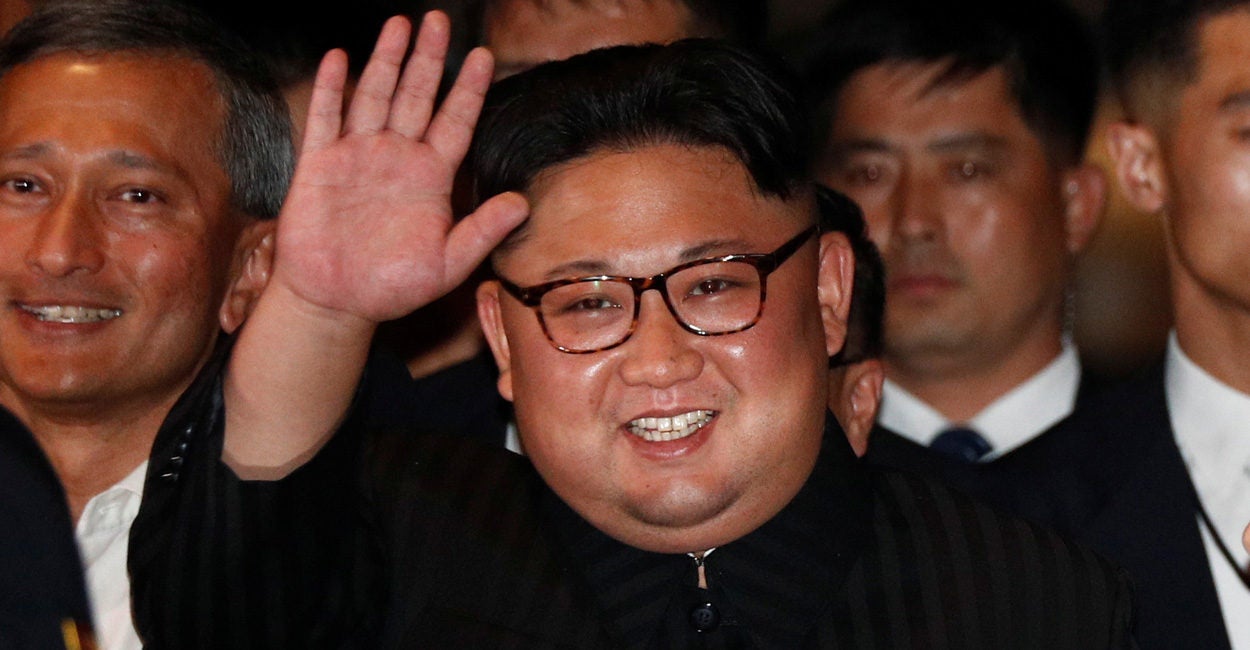
North Korea's leader, Kim Jong Un, appears jocular during a Monday visit to the Marina Bay Sands hotel in Singapore. (Photo: Edgar Su/Reuters/Newscom)

    Amid intense attention to the historic meeting between President Donald Trump and North Korean dictator Kim Jong Un, optimists and skeptics alike have questions about the next step.
The two leaders’ meeting in Singapore was not expected to reach a major breakthrough.

Secretary of State Mike Pompeo said last week the administration would seek progress toward a formal treaty to be ratified by the SenateThat would make it more difficult for a future president to unravel a deal, as Trump unraveled President Barack Obama’s Iran nuclear deal. It also would provide assurance to Kim that the United States won’t pursue regime change after his country does away with its arsenal.

A treaty also means contentious debate abroad and at home. “It will really have to be substantial, with almost everything we hoped for, to get Senate confirmation,” Alexander Vershbow, ambassador to South Korea from 2005 to 2008, told The Daily Signal. “If they draw up a treaty, the Senate will want it airtight.”

Here are the six of the big questions remaining:

1. How to Define ‘Denuclearization’?
    A United Nations resolution and U.S. policy call for “complete, verifiable, irreversible, dismantlement” of North Korea’s nuclear weapons program. U.S. experts agree that Trump must stand firm on some version of this in an agreement that would guarantee Kim remains in power and lifts economic sanctions on the communist regime.
    “The president can’t walk away from the Iran deal and then reach a deal with North Korea that isn’t verifiable and irreversible denuclearization,” retired Army Lt. Gen. Jerry Boykin, a former deputy undersecretary for intelligence at the Defense Department, told The Daily Signal. “We need to let Kim know that we consider his nuclear program an existential threat to the United States and are willing to use all available means to oppose it,” Boykin said. “Kim will relay to the president that he needs a security guarantee to let the nuclear arsenal go, so he is secure the United States is not interested in regime change.”
    However, the guarantee that the U.S. will not support regime change may not be enough, Vershbow said. “Some people believe Kim may have had his Deng Xiaoping moment,” said Vershbow, the former ambassador, referring to the communist China leader who succeeded the more brutal Mao Zedong and brought market reforms while maintaining authoritarian rule.
   “But the official ideology is that they must rule over all of Korea and that the South is illegitimate,” Vershbow said. “The question is how different will Kim Jong Un be from his father and grandfather?”

Defining denuclearization will be a major difficulty, said Bruce Klingner, a former Korea expert with the CIA who is senior research fellow for northeast Asia at The Heritage Foundation.
“This should include short-range and medium-range ballistic missiles that threaten allies South Korea and Japan,” Klingner said in a public statement. “North Korea has demonstrated for decades that [it] has vastly different definitions of such terms as denuclearization and even what comprises the ‘Korean Peninsula.’”

2. What Language Is Needed for a Long-Term Deal?
   In any agreement, North Korea must “publicly, explicitly, and unequivocally accept and commit to work toward the U.N.-required abandonment” of its nuclear, biological, and chemical weapons programs, Klingner said. “Any new agreement with North Korea has to be very specific and go beyond what has been written in the past,” he said. “It should be similar to the carefully crafted text, with robust verification requirements, of arms control treaties with the Soviet Union and Warsaw Pact rather than the vague text of previous agreements with North Korea.”

In the six-party talks joint statement from September 2005, North Korea pledged nonproliferation of nuclear weapons and to grant access to the International Atomic Energy Agency. “The Democratic People’s Republic of Korea (North Korea) committed to abandoning all nuclear weapons and existing nuclear programs and returning at an early date to the treaty on the nonproliferation of nuclear weapons and to IAEA safeguards,” the statement said. Vershbow came to his job at a time when the six-party talks seemed promising, only to have North Korea—then under the rule of Kim Jong Il—back out and restart nuclear testing. “I’ve seen this movie before, but it might have a different ending this time, one that confounds the skeptics,” Vershbow said of the Singapore summit.

3. Will US Troops Leave South Korea? If So, When?
    The current Kim regime wants the United States to withdraw its troops from South Korea.
“Removing U.S. troops from South Korea is not something we can agree to upfront. For many South Koreans, that is a big concern,” said Boykin, the retired lieutenant general who is now executive vice president of the Family Research Council, a conservative advocacy group.
Experts contend this will create a significant concern for U.S. allies in Asia, and the Trump administration should reach an agreement on other issues before talking about troops in South Korea.
   “If the North demands, and the U.S. agrees, to take away U.S. forces from South Korea, the allies in Asia such as Japan and Singapore will question whether the U.S. is committed to this part of the world,” Matthew Heiman, a lawyer formerly with the national security division of the Justice Department, told The Daily Signal.

4. How Will Sanctions Relief Work?
    The Trump administration increased sanctions on Kim’s regime, which helped bring North Korea to the bargaining table, said Vershbow, the former ambassador to South Korea. .
“There [is] a combination of fear from the Trump military threats and the tighter sanctions that got Kim’s attention,” Vershbow said. No sanctions relief should come before North Korea makes a significant step toward denuclearization, Klingner said.
    Existing sanctions against North Korea are a combination of U.N. resolutions and sanctions the United States and other countries imposed individually. Also, legislation passed by Congress requires specific actions be undertaken by North Korea before the United States relaxes sanctions. “An agreement where Kim continues to run the country could be similar to Vietnam and Cambodia,” Heiman said. “These are countries that have economies open to the world and are enjoying the benefits, but still have communist dictatorships.”
   The young North Korean leader perhaps realizes an agreement is needed for his government and country to survive, said Lester Munson, former staff director of the Senate Foreign Relations Committee, where he negotiated committee priorities with the White House. “Clearly the current model is not sustainable long term,” Munson told The Daily Signal. “This country has had this system for 65 years. The norm for these types of oppressive regimes to survive is 70 years.”

5. What Must US Expect on Human Rights?
   Trump administration officials said human rights haven’t been a focus of early talks, but experts say these matters will have to be addressed before any final agreement“How do we not defend our values in a negotiation like this if we guarantee security to a despot with a record of doing terrible things to his people?” Munson said. “That is not a place we want to be. Human rights has to be part of any agreement. We cannot turn a blind eye to that.”
   North Korean prison camps contain between 80,000 and 120,000 prisoners, according to a report by Olivia Enos, policy analyst for Asian studies at The Heritage Foundation. Enos is in Singapore. “While the focus of the summit should no doubt be on convincing North Korea to abandon its missile and nuclear weapons programs, the U.S. should also raise concerns over North Korea’s abhorrent human rights record,” Enos writes. “If the U.S. is prepared to call for complete, verifiable, irreversible dismantlement of North Korea’s nuclear program, it should also be prepared to call for complete, verifiable, irreversible dismantlement of its vast system of prison camps.”
   Trump addressed North Korea’s horrible human rights abuses during speeches at the South Korean National Assembly, during the State of the Union, and when meeting with escapees from North Korea.

6. What Role Will China Play?
    China could play a constructive or destructive role in the negotiations, and Kim might enjoy playing the two superpowers against one anotherHeiman, the former Justice Department national security lawyer, said he wouldn’t compare the meeting with Nixon and Mao, but said China could have a critical impact.
   “China parted with the Soviets and became more aligned with the U.S.,” Heiman said of the result of the U.S. opening trade with China. “This meeting could move North Korea closer to the U.S. than China. For the Trump team, the primary goal is denuclearization. But the secondary goal has to be a strategy of a Chinese disadvantage.” Heiman said it’s to China’s advantage to keep a stable North Korea that poses a nuclear threat to U.S. allies Japan, South Korea, and other competitors in Asia. However, Boykin said he believes that ultimately China will be on board.
   “China does not want a unified Korea that is aligned with the West, but they don’t want war on the peninsula,” Boykin said. “That would only end one way. Kim would be dead and North Korea would be occupied by the U.S. military, with the potential threat, as in the 1950s, of a conflict with China.”

[italics and colored emphasis mine].

Monday, June 11, 2018

#2338 (6/11) " Trump's Historic Opportunity To Press Kim Jong Un To Free 50,000 Christians From Auschwitz-Like Prison Camps"

"TRUMP’S HISTORIC OPPORTUNITY TO PRESS KIM JONG UN TO FREE 50,000 CHRISTIANS FROM AUSCHWITZ-LIKE PRISON CAMPS"June 8, 2018 by Lindy Lowry in Asia, https://www.opendoorsusa.org/christian-persecution/stories/trumps-historic-opportunity-to-press-kim-jong-un-to-free-50000-christians-from-auschwitz-like-prison-camps/ [AS I SEE IT: Yes, this article is rather long. [Go to the web link to see pictures I could not downoload here.] But this special opportunity to at least begin to see changes in the treatment of many thousands calls us to be informed and to PRAY! - Stan]
    As the summit between President Trump and North Korea’s Kim Jong Un approaches on June 12 [late in the evening of June 11th EST] in Singapore, news headlines speculating on what the two world leaders will discuss run rampant. To date, the White House has itemized denuclearization and improving relations between the two countries as front-burner topics. But the historic meeting also gives President Trump an unprecedented opportunity on another front.

    For the first time in history, the President of the United States has the chance to sit face-to-face with Kim Jong Un, look him in the eyes, and confront the dictator about his country’s decades-long severe human rights violations, specifically those in North Korea’s infamous prison camp system—prisons that have been compared to World War II Nazi concentration camps.
   The opportunity will come just days after the recent prison reform summit in Washington, D.C., where the President met with leaders to discuss needed reforms for the U.S. prison system. A month ago, he met with Nigeria President Buhari and, at the urging of Open Doors supporters, addressed widespread violence against Christians in the country’s unstable Middle Belt.
    Now, it’s President Trump’s time to challenge and talk straight with the ruler of the country that for the last 17 years has ranked at No. 1 on Open Doors’ annual World Watch List, which documents the top countries where it’s most difficult to be a Christian.

AS BAD—OR EVEN WORSE—THAN AUSCHWITZ
    A 2017 report by the International Bar Association War Committee offers gut-wrenching details from personal testimonies, video, transcripts and scholarly works about the state of North Korea’s prison camps. One of the judges, a former child survivor of the notorious concentration camp in Auschwitz, said the conditions in North Korea were as bad—or even worse—than what he experienced in the Nazi concentration camp.
   The abusive camps are used as a tool by the Kim regime to keep North Koreans in line. They are a constant threat designed to punish and reform citizens through interrogation-based detention centers, ritual torture and finally, labor camps where they serve their sentence. The Kim regime ensures that North Koreans hear the stories of the shocking reality of the inhumane conditions and abusive treatment inside the camps—an effective deterrent.
   North Korean prisoners are often punished for digging for food. This drawing comes from a former prisoner detained in the Chongori prison.
Accounts and stories of ex-prisoners in North Korea are sobering reminders of the darkness and brutality. The recent War Committee report shares stories of routine public executions carried out in front of both children and adults designed to “subdue the prison population.” In another account, the prison guards executed starving prisoners “found digging for edible plants on a mountainside.” Kenneth Bae, a missionary imprisoned in a camp and later released, described working long hours manually tilling rocky soil in a field. Bae would routinely lose dozens of pounds, be sent to hospitals to recover, and then be sent back to the camps.

   And for Americans, one of the most notable examples of North Korea’s inhumane treatment of prisoners is Otto Warmbier, an American student from Cincinnati unjustly imprisoned for 18 months on trumped-up charges—a pattern under Kim Jong-un’s rule. Warmbier died last year—only days after being medically evacuated from a North Korean prison. His father, Fred Warmbier, has said that essentially, North Korea sent his son home in a body bag. Otto’s death serves as a disturbing reflection of Kim’s disregard for human life and human rights that continues to characterize and define the communist country.

A DAILY REALITY FOR 250,000 NORTH KOREANS
   The abuses, injustices and severe mistreatment endured in the North Korean prison system are difficult to wrap our heads around. But they are a daily reality for an estimated 250,000 North Koreans held in prison camps—a reality that’s happening right now, at this very moment.
   While I am thankful for President Trump’s recent efforts to free American citizens Kim Hak-song, Kim Sang-duk and Kim Dong Chul from imprisonment in North Korea (two were Christian professors from North Korea’s only private university) and American Josh Holt held in Venezuela, as well as his and U.S. government leaders’ engagement in the efforts to free U.S. pastor Andrew Brunson from prison in Turkey, we can’t stop here.
   The lives of thousands of mothers, fathers, sisters, brothers and children depend on President Trump’s decision to not look away and instead initiate the conversation to confront these daily atrocities. Open Doors CEO David Curry reminds us that President Trump has a unique opportunity to advocate for far more than a handful of hostages. “We must push forward to negotiate with North Korea to release all political dissidents being held across their prison system,” he says.

   We can pray and urge President Trump to be intentional about and committed to challenging Kim who in late April 2018 condemned U.S. criticism of its human rights record as “ridiculous.” Curry advocates for transparency within the country’s prisons and calls for Kim to open his labor camps to the Red Cross and the United Nations Council of Inquiry“We must gain transparency into how these people are being treated,” Curry said. “And then President Trump must make it clear that Kim Jong Un can only be invited back into the world’s good graces, and be lauded for political gestures if he commits to resolving decades of human rights violations at the hands of his regime.”

50,000 CHRISTIANS IN PRISON FOR THEIR FAITH IN CHRIST
    Since the 1950s and ‘60s, the number of Christians in North Korea has diminished when—under the leadership of Kim II-Sung–70,000 Christians were killed, sent to labor camps or banished to remote areas. Open Doors’ partners in North Korea estimate that a small number of these banished Christians are still alive, along with about 50,000 of their descendants, and that another 50,000 believers are held in prison and hard labor camps, re-education camps and detention centers.

In the communist country, Christians are seen as the enemy. “Christianity is regarded as a political crime and it is punished like one,” says John Choi, a North Korean refugee and survivor of a prison camp, arrested and jailed when he was 15. According to the recent War Committee report, inside the camps, prisoners are often “tortured and killed on account of their religious affiliation, with officials instructed ‘to wipe out the seed of [Christian] reactionaries.’”
   In one especially heinous account, guards killed a prisoner’s newborn baby by feeding it to the guard dogs. “Many Christians do not survive,” Choi told Open Doors’ Sarah Cunningham. “They are tortured and used to test biological and chemical weapons—a VX gas like the kind used to assassinate Kim Jong-un’s half-brother. “Christian women who become pregnant are especially targeted for this type of torture. It’s because they possess or read the Bible that they perish in this severe way,” he said. Under Kim’s rule, “Christians literally have to choose between life and death.”
   Describing her detention, a North Korean believer/prison camp survivor echoes Choi’s observations and experience. She was forced to strip down for a cavity search, then placed in solitary confinement, a room just large enough for a single person to lie down, because of her faith. Pregnant prisoners were taken away for abortions, she said. After violent interrogations, prisoners in labor camps continue to face physical and emotional torment. They work 12-hour shifts, receive a few hundred grams of food a day, and are not permitted to bathe themselves.
  Another former prisoner shares her experience: “My parents were secret Christians,” she said, “and when we were discovered, we were forcibly moved to a camp and accused of being a rebellious Christian family. “The fact that our family did not deny our faith was the only reason that we were not allowed to see, speak, or go anywhere. We had to live long years and suffer from the hardest labors.” 

PRAYING AND FASTING FOR GOD’S UNSEEN HAND TO MOVE
   Open Doors Founder Brother Andrew has seen a lifetime of answered prayers, both in small and large, eternity-altering ways. He reminds us that, “our prayers can go where we cannot … there are no borders, no prison walls, no doors that are closed to us when we pray.” 
   The thought of 50,000 North Korean believers imprisoned for their faith being freed from the gates of these camps and their inhumane living conditions should drive the world’s 2.2 billion Christians to their knees. We have a biblical responsibility to intercede for these believers and ask God to make it clear to President Trump that the time is now—for such a time as this—to start this unprecedented freedom work for His suffering people.
   The picture of an underground church of 300,000 Christians worshiping Christ together and openly reading the Bible should compel us to do all we can—what we are called to do—to pray for President Trump, asking God to remove the scales from the eyes of Kim and his regime like He did 2,000 years ago days after a Kingdom-advancing encounter on a dirt road toward Damascus. We can pray for God’s Kingdom to expand on the northern part of the Korean peninsula like never before in history.
   I can’t help but think that this landmark meeting gives not only President Trump the historic opportunity to address these decades of abuse and set a course in motion for a new North Korea—and a better tomorrow for God’s people. It also affords us the chance to join God in what He is doing through prayer and fasting. Please join Open Doors on June 11 for 24 hours of prayer and fasting for the Summit. We also invite you to participate in an online Prayer Summit the night of June 11 when Christians around the globe will gather to pray together.

As the Body of Christ that both suffers and rejoices with our persecuted family (1 Cor. 12:26), our support for Christians in North Korea is critical to the life and growth of the underground church. We can’t afford to neglect this moment.


To download a special prayer guide re: this call to prayer, go to - https://www.opendoorsusa.org/wp-content/uploads/2018/06/NK-AD-PROMO-1024x301.jpg

[italics and colored emphasis mine]

Sunday, June 10, 2018

#2337 (6/10) SUNDAY SPECIAL: "Solzhenitsyn’s Graduation Speech Revisited Speaking Truth to Culture"

"SOLZHENITSYN'S GRADUATION SPEECH REVISITED - SPEAKING TRUTH TO CULTURE"by John Stonestreet, Breakpoint.org, June 8, 2018; http://www.breakpoint.org/2018/06/solzhenitsyns-graduation-speech-revisited-2/
    In 1978, at Harvard, America heard from a prophetic voice. His comments have proven true and are worth revisiting.

Few college commencement speakers these days dare challenge our culture’s rampant political correctness and secularism. But a generation ago, on June 8, 1978, the renowned Soviet dissident Aleksandr Solzhenitsyn gave a stunning address at Harvard University that not only made those assembled there uncomfortable; it provoked many to boo.

Why would the audience boo this moral giant, who had stared down a brutal communist dictatorship’s Gulags and won the Nobel Prize in literature? Because people expected him to celebrate the West and condemn communism, but he came over and condemned communism and the West. Not only this, but Solzhenitsyn had the gall to speak of something reviled at the time by the elites on both sides of the Atlantic: truth.
    “[T]ruth,” Solzhenitsyn said at the start, “eludes us if we do not concentrate our attention totally on its pursuit. But even while it eludes us, the illusion of knowing it still lingers and leads to many misunderstandings. Also, truth seldom is pleasant; it is almost invariably bitter.

In a classic analysis of our prevailing worldview, Solzhenitsyn said the West had exchanged belief in unchanging truth for a relentless legalism. The most tragic and significant result, he said, was the absence of “civil courage.” And he pointed to three lines of evidence: 

First, “destructive and irresponsible freedom had been granted boundless space.”
   How a culture understands freedom – whether to virtue or for immediate gratification – determines its stability. As Os Guinness wrote in his recent book “A Free People’s Suicide,” the greatest enemy of freedom, ironically, is freedom. I would tweak that a bit—the greatest enemy of freedom is poorly defined freedom, what Chuck Colson called freedom without virtue.

Second, Solzhenitsyn pointed to the decadence of art and a lack of great statesmen. That line makes me think of the Rothko painting called “Untitled, (Yellow and Blue),” which basically is a blue stripe on a yellow background. That’s it… and it just sold at a New York auction for $46.5 million.
    And the lack of great statesmen? While there are certainly many courageous individuals worthy of our respect, consider how our society has defined greatness down. This is evidenced by the fact that the Arthur Ashe Courage Award by ESPN, once awarded to Nelson Mandela, will this year be awarded to Bruce Jenner – not for his Olympic feats but for his announcement that he was a woman, a year after they awarded it to Michael Sam for announcing his sexual orientation.

And we’ve long struggled with who to call heroes in the West: confusing celebrities and athletes with heroes. As Dr. Bill Brown, a mentor and co-author of mine, says: in other countries, heroes make history. In our country, they make CDs and touchdowns.

And Solzhenitsyn’s final warning referred to the 1977 New York City blackout when, as he said, “all of a sudden crowds of American citizens start looting and creating havoc. The smooth surface film must be very thin, then, the social system quite unstable and unhealthy. If that reminds you of recent events, you’re not alone.

Can anything be done about the loss of civil courage? Well, our friend Eric Metaxas has written about two individuals who found themselves in fragile cultural moments not dissimilar to ours: William Wilberforce and Dietrich Bonhoeffer.
   While Wilberforce was able, by God’s grace, to see a cultural and spiritual recovery, Bonhoeffer was not. And yet, neither man was a failure. Like them, we don’t know the future of our culture, but that’s not up to us. What is up to us it to courageously commit ourselves to truth and virtue, love God and our neighbor, and care for the victims of the bad ideas our culture is promoting. As Father Richard John Neuhaus wisely said, paraphrasing T. S. Eliot, “For us, there is only the trying . . .  the rest is God’s business.”

(This commentary originally aired June 9, 2015.)

[italics and colored emphasis mine]
RESOURCES - Solzhenitsyn’s Graduation Speech Revisited: Speaking Truth to Culture
A few boos at a commencement speech could not deter a man like Aleksandr Solzhenitsyn, who survived the Soviet Gulag. Will we have Solzhenitsyn-like courage when the crowd turns on us for our faith? Read Solzhenitsyn’s Harvard commencement speech and Chuck Colson’s take on it. They’re both linked in this Resources section.
"A World Split Apart"Alexander Solzhenitsyn's Harvard graduation speech| AmericanRhetoric.com | June 8, 1978; http://www.americanrhetoric.com/speeches/alexandersolzhenitsynharvard.htm
“A Prophet without Honor”Chuck Colson | BreakPoint.org | June 8, 2000; http://www.breakpoint.org/2000/06/prophet-without-honor-2/
Chuck Colson on Alesksandr Solzhenitsyn: Video - https://www.youtube.com/watch?v=2G-uGeed7Bk

Saturday, June 9, 2018

#2336 (6/9) PRO-LIFE SAT: "Members of Congress Demand Investigation After Report Shows Planned Parenthood Ignores Sexual Assault on Teen Girls"

"MEMERS OF CONGRESS DEMAND INVESTIGATION AFTER REPORT SHOWS PLANNED PARENTHOOD IGNORES SEXUAL ASSAULT ON TEEN GIRLS" -  Steven Ertelt, JUN 7, 2018; |http://www.lifenews.com/2018/06/07/members-of-congress-demand-investigation-after-report-shows-planned-parenthood-ignores-sexual-assault-on-teen-girls/ [AS I SEE IT: I regularly pray for the efforts of the 2 pro-life investigative groups mentioned in this article - Live Action and Life Dynamics. I praise God for their continued efforts to uncover abuses from PP, that supposedly "cares" for girls and women but as this report shows often fails to do so. It is apalling that Congress continues to find reason to continue to give even one penny the this anything but non-profit group while thousands of pro-life centers that reach out at no charge to girls and women get NO federal help. I pray for the day this insanity will end. Also, I ask where the outrage is by the so-called #MeToo movement; here is a case of sexual abuse that clearly needs them to speak to! - Stan]
.
    Members of Congress demanded an investigation today after a new report showed that Planned Parenthood ignores sexual assault on teen girls.

   As LifeNews reported, the Planned Parenthood abortion chain has been caught repeatedly performing abortions on abuse victims as young as 12 and 13 years old, failing to report suspected sexual abuse to authorities, and sending victims back to their abusers. A new investigative report report chronicles these cases and reveals Planned Parenthood’s decades-long pattern of helping child sex abusers cover up their crimes. Planned Parenthood has a history of not reporting statutory rape or sexual abuse to authorities. The abortion corporation frequently covers up cases of rape with abortion and refuses to report rape cases to law enforcement.

    Now, members of Congress are calling on the Health Department to investigate. Reps. Chris Smith of New Jersey, Vicky Hartzler of Missouri and Diane Black of Tennessee were among those participating in a press event today seeking the probe.
    “As the prime author of the Trafficking Victims Protection Act of 2000, the landmark law that seeks to protect victims, mostly women and children, I find Planned Parenthood’s complicity appalling,” Rep. Smith said of the report’s findings. “I join my colleagues in calling for the Department of Health and Human Services to investigate these past failures by Planned Parenthood and determine how far Planned Parenthood’s failure to report extends.” “In a previous exposé in 2011, an undercover videotape sting operation by Live Action exposed seven Planned Parenthood facilities including in my state, in Perth Amboy, NJ, that were eager to assist actors posing as sex traffickers to procure abortions for their underage trafficked girls,” Smith added.
   
   Smith said Planned Parenthood has a federal obligation to report such crimes. “Planned Parenthood receives nearly $60 million every year through the Title X family planning grant program. 500 Planned Parenthood clinics are Title X clinics, and Title X is the second-largest funding stream for Planned Parenthood. Federal law states that Title X recipients are not exempt from state laws that mandate the reporting of child abuse,” he explained. “And yet, Planned Parenthood failed to report.”
   “I join my colleagues in calling for the Department of Health and Human Services to investigate these past failures by Planned Parenthood and determine how far Planned Parenthood’s failure to report extends,” Smith said.
    “In addition, I thank HHS for its recently proposed Title X regulation, which would strengthen protections for victims of sexual abuse,” he added. “It goes further than simply noting that Title X recipients are not exempt from state reporting laws. It requires documentation of a plan to comply with State laws, annual training of all individuals serving clients on behalf of the Title X project, and protocols to counsel minors on how to resist coercion. These requirements will help to ensure that – at least within the Title X program – Planned Parenthood’s unconscionable, inhumane coverup of child sex abuse will come to an end.”

Planned Parenthood abortion clinics have come under fire countless times over the years for not reporting cases of statutory rape to authorities as required by state law. In another case in Arizona, officials said a Planned Parenthood center failed to provide the proper report to authorities about a victim of a young man accused of being a serial rapist. Planned Parenthood failed to report the rape, and the young man allegedly raped 18 or more teenage girls before he was caught, according to authorities.
   In 2008, a Planned Parenthood in Bloomington, Indiana was exposed for agreeing to help cover up the sexual abuse of a minor in an undercover sting.
   In another case in Ohio, Planned Parenthood faced a lawsuit after it failed to report the statutory rape of a 14-year-old girl. The girl’s soccer coach got her pregnant and then took her to the abortion clinic to cover up his crime, LifeNews reported.

Planned Parenthood has been caught numerous times ignoring signs of sexual abuse or even covering up the abuse.
   In March 2015, Life Dynamics wrote for LifeNews.com about a California man who sexually abused two of his daughters and took the younger one to Planned Parenthood for two abortions in 2010. Court documents indicated that the abortion facility did not report the suspected abuse of the 13-year-old girl to authorities. The girl said she did not tell clinic staff that her father had impregnated her, but instead made up a story about having a boyfriend her own age.
   The Life Dynamics criminal cases summaries include another young girl who was raped for an additional 1 ½ years after her 44-year-old abuser took her to Planned Parenthood for an abortion. 
   In another case, a young victim was taken to Planned Parenthood for an abortion after her abuser sexually assaulted her at the age of 15.
   And an Ohio Planned Parenthood faced a lawsuit for failing to report the sexual abuse of the young girl. The case involved a 22-year-old soccer coach who was convicted of sexually assaulting a 14-year-old girl on his team, LifeNews reported. According to reports, he statutorily raped the girl; and when she became pregnant, he took her to Planned Parenthood to abort their unborn baby.

The abuse extends to sex trafficking victims as well. In 2011, a Live Action investigation uncovered wide-spread willingness among Planned Parenthood employees to help sex traffickers abuse young teens.
   The undercover sting caused public outcry, and the abortion chain promised to retrain its staff about identifying sex trafficking victims and abuse. However, a former abortion clinic worker said Planned Parenthood did not fulfill its promise to the public, and trained its employees on how to spot undercover investigators instead.

SIGN THE PETITION! Congress Must De-Fund Planned Parenthood Immediately - https://www.gopetition.com/petitions/congress-must-de-fund-planned-parenthood-immediately.html

[italics and colored emphasis mine]
-----------------------------------------------------------------------
"Exclusive: 56 Lawmakers Ask HHS Probe of Planned Parenthood’s Response to Child Sexual Abuse"Rachel del Guidice / @LRacheldG / June 07, 2018 / https://www.dailysignal.com/2018/06/07/exclusive-lawmakers-ask-hhs-probe-of-planned-parenthoods-response-to-child-sexual-abuse/

Friday, June 8, 2018

#2335 (6/8) "Supreme Court Upholds Baker’s Right to Disagree With Gay Marriage in Marketplace"

"SUPREME COUT UPOLD'S BAKER'S RIGHT TO DISAREE WITH GAY MARRIAGE IN THE MARKETPLACE"Ryan T. Anderson / @RyanTAnd / June 04, 2018 / https://www.dailysignal.com/2018/06/04/supreme-court-upholds-bakers-right-to-disagree-with-gay-marriage-in-marketplace/
The Supreme Court on Monday upheld Jack Phillips' right to decline to bake a custom cake for a same-sex wedding based on his religious convictions. (Photo: mbolina/Getty Images)

Ryan T. Anderson, Ph.D., is the William E. Simon Senior Research Fellow in American Principles and Public Policy at The Heritage Foundation, where he researches and writes about marriage, bioethics, religious liberty and political philosophy. Anderson is the author of several books and his research has been cited by two U.S. Supreme Court justices in two separate cases. Read his Heritage research.

Monday’s 7-2 Supreme Court decision in Masterpiece Cakeshop v. Colorado Civil Rights Commission is a big win for the religious liberty of all Americans. The court made it clear that hostility toward religion has no place in America, least of all in our government.
   At the center of Masterpiece Cakeshop is Jack Phillips, the Christian cake artist who can’t in good conscience design and create custom wedding cakes that celebrate same-sex marriages. The court held that the state of Colorado was “neither tolerant nor respectful” of Phillips’ beliefs about marriage. The court pointed out that the Colorado Civil Rights Commission showed “clear and impermissible hostility toward the sincere religious beliefs motivating his objection.”

But as the court also noted, “Religious and philosophical objections to gay marriage are protected views and in some instances protected forms of expression.”

Which is why the Colorado commission should have respected Phillips’ views about marriage on an equal basis as it did three bakers who declined to bake anti-gay cakes. The commission ruled that these three bakers did not violate the anti-discrimination statute when they declined to make cakes with religious messages opposing homosexuality. And yet the commission held that Phillips violated the anti-discrimination statute when he declined to create a cake celebrating a same-sex wedding.

But as Justice Neil Gorsuch notes (in a concurring opinion joined by Justice Samuel Alito), either all four bakers violated the Colorado anti-discrimination law, or none did. Gorsuch writes:
   [T]here’s no indication the bakers actually intended to refuse service because of a customer’s protected characteristic. We know this because all of the bakers explained without contradiction that they would not sell the requested cakes to anyone, while they would sell other cakes to members of the protected class (as well as to anyone else).
   As I argue in the Georgetown Journal of Law and Public Policy, “Disagreement is not always discrimination.” And this is true when it comes to disagreements about same-sex marriage.

Phillips didn’t discriminate based on sexual orientation when he refused to design and bake a cake for a same-sex wedding. He didn’t take his customer’s sexual orientation into consideration at all. He declined to use his artistic abili­ties to create a custom cake to celebrate a same-sex wedding because he objected to same-sex marriage, based on the common Christian belief that such partnerships (along with many other relationships—sexual and not, dyadic and larger, same-sex and opposite-sex) aren’t marital.

Nowhere need Phillips’ reasoning have even referred to the partners’ sexual orientation, much less any ideas or attitudes about gay people as a class (good or bad, explicit or not). It wasn’t his customer’s identity that motivated Phillips at all. It is even clearer that Phillips’ reason for refusing to bake the wedding cake was not the invidious discrimination of avoiding contact with others on equal terms. As Phillips said to the same-sex couple, “I’ll make you birthday cakes, shower cakes, sell you cookies and brownies, I just don’t make cakes for same-sex weddings.” He sought only to avoid complicity in what he considered one distortion of marriage among oth­ers—as shown by his refusal to create divorce cakes as well.

By and large, such refusals simply reflect what the Supreme Court in Obergefell recognized as a disagreement about marriage among people of good faith motivated by honorable premises. Applying anti-discrimination policy here amounts to an enforcement of sexual orthodoxy on reasonably disputed questions: It punishes people for acting on reasonable views of marriage. But this is an abuse of anti-discrimination policies, which, as I explain, should serve as “shields, not swords.” [italics and colored emphasis mine]
Americans should be free to live their lives, including at work, in accordance with their belief that marriage unites husband and wife. Congress and the states should make this crystal clear by passing legislation, such as the First Amendment Defense Act, which explicitly prevents the type of government intolerance that took place in Colorado.

Just as we’ve combatted sexism without treating pro-life medicine as sexist, so too we should not treat support for marriage between a man and a woman as anti-gay. Pro-life conscience protections do not undermine Roe v. Wade or women’s equality. Neither do conscience protections for conjugal-marriage supporters undermine Obergefell or LGBT equality. Both protect the human dignity and human rights of those who dis­sent from prevailing social norms. Both promote the common good as shields, not swords.

 [italics and colored emphasis mine]

-----------------------------------------------------------------------
"Exclusive: Christian Baker Hopes to Create Without ‘Fear of Punishment From the Government’"Ken McIntyre / @KenMac55 / June 05, 2018; https://www.dailysignal.com/2018/06/05/exclusive-christian-baker-hopes-to-create-without-fear-of-punishment-from-the-government/